

Most business owners researching this question end up getting sold whichever model the agency they’re talking to happens to offer, rather than an honest comparison of both. An agency that only sells retainers will explain why you need one. An agency that only does one-off projects will explain why that’s all you need. Neither is necessarily wrong, but neither is giving you the full picture, so this article gives you a genuinely balanced breakdown, along with a practical framework to work out which model actually fits your business.
What’s the Core Difference Between an SEO Retainer and a One-Off Project?
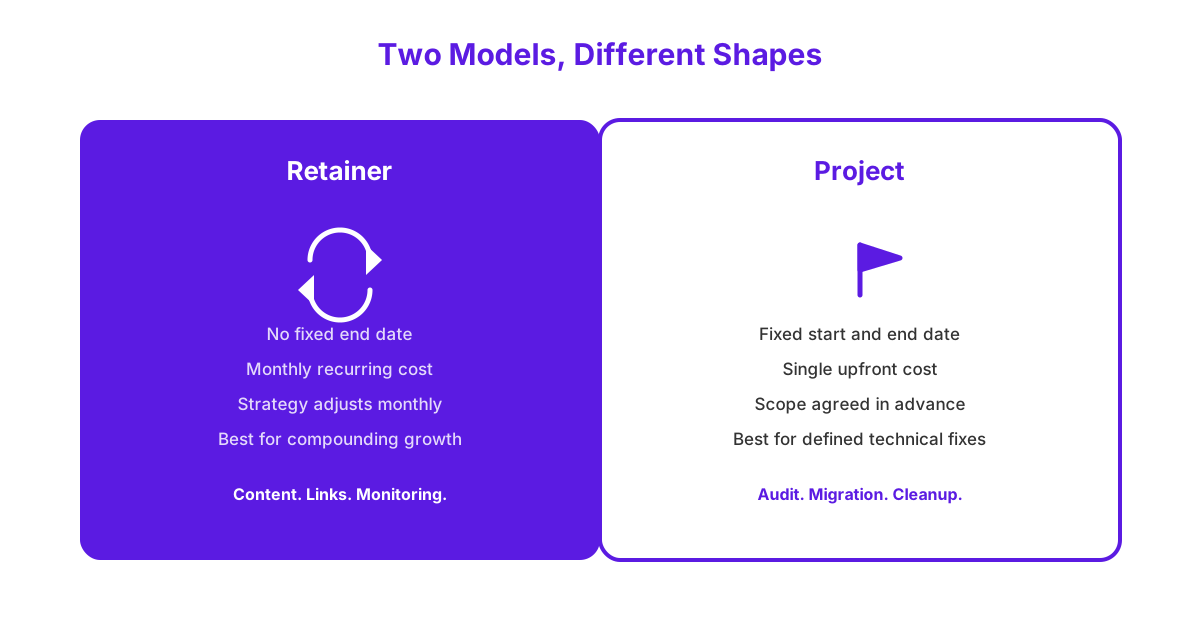
The core difference between an SEO retainer and a one-off project is that a retainer is ongoing monthly work with continuous strategy and reporting, while a one-off project is a fixed-scope engagement with a defined end point. A retainer typically runs indefinitely, month after month, with the agency continuously adjusting strategy based on results, algorithm changes, and new opportunities as they arise. A one-off project, by contrast, has a clearly scoped set of deliverables agreed upfront, a start date, and an end date after which the engagement is complete.
This distinction matters because it shapes everything else about the engagement: how you’re billed, what level of ongoing attention your site receives, and how the relationship with the agency actually functions. A retainer assumes an ongoing relationship where priorities can shift over time as new data comes in. A project assumes a known, finite scope of work that doesn’t need to flex once it’s underway.
Neither structure is inherently better than the other. The right choice depends entirely on what your business actually needs at this point in time, which is the question this article is built to help you answer honestly.
What Does a One-Off SEO Project Usually Include?
A one-off SEO project usually includes a technical audit, crawl error fixes, metadata cleanup, schema markup repair, migration planning, one-time keyword research, and internal link improvements. These are all tasks with a clear, definable scope: you can specify exactly what needs to be audited, fixed, or researched, and know when that work is genuinely finished. A technical audit, for example, has a natural endpoint once every page has been crawled and every issue has been documented and addressed.
Migration planning is a particularly common reason businesses choose a project specifically, since moving a website to a new platform or domain is inherently a one-time event with a defined beginning and end. Metadata cleanup and schema markup repair follow the same logic: once every page has correct titles, descriptions, and structured data, that specific task is complete, and there’s no ongoing work required to maintain it unless new pages are added.
The defining feature of all of this work is that it has a natural finish line. Once the agreed deliverables are complete and verified, the engagement ends, and the business is left with a healthier, better-structured website rather than an ongoing relationship.
What Does an SEO Retainer Usually Include?
An SEO retainer usually includes ongoing content creation, continuous technical monitoring, monthly reporting, link building, keyword tracking, and strategy adjustments made over time as results and market conditions change. Unlike a project’s fixed deliverables, a retainer’s actual monthly activities often shift based on what’s working, what’s not, and what new opportunities or issues emerge. Content creation is typically the largest recurring component, since search visibility for most competitive terms depends on a steady stream of new, relevant content rather than a one-time push.
Continuous technical monitoring catches new issues as they appear, such as a broken page after a website update or a sudden drop in rankings for a specific keyword, rather than only catching these issues during a periodic audit. Monthly reporting and keyword tracking give both the business and the agency an ongoing view of what’s actually working, which then feeds directly into adjusting strategy the following month. Link building, when included, is inherently ongoing work, since authority accumulates gradually over many months rather than through a single event.
The defining feature of a retainer is that there is no natural finish line built into the engagement itself. The relationship continues for as long as both sides find it valuable, with the specific mix of monthly activities adjusting as circumstances change.
SEO Retainer vs One-Off Project: Side-by-Side Comparison
Comparing the two models side by side makes the practical tradeoffs clearer than describing them separately. The table below breaks down the core differences across the factors that matter most when choosing between them.
| Feature | SEO Retainer | One-Off Project |
|---|---|---|
| Duration | Ongoing, no fixed end date | Fixed, with a defined start and end |
| Cost Structure | Recurring monthly fee | Single upfront or milestone-based fee |
| Consistency | Continuous attention and monitoring | Concentrated attention during project window only |
| Strategy Development | Adjusts month to month based on results | Fixed scope agreed before work begins |
| Access to Experts | Ongoing access throughout the relationship | Access limited to the project timeframe |
| Performance Tracking | Regular monthly reporting | Typically a single before and after comparison |
| Flexibility | High, can pivot as priorities change | Low, scope is fixed once agreed |
| Best For | Long-term, competitive, content-dependent growth | Defined technical fixes, audits, and migrations |
When Is a One-Off SEO Project Enough?
A one-off SEO project is enough when the work needed has a clear, finite scope that doesn’t require ongoing attention once completed. This is a genuinely common and entirely valid choice for many businesses, not simply a lesser option chosen only when budget doesn’t stretch to a retainer.
Situations Where a Project Is the Right Call
A project is the right call for site health fixes, website migrations, one-time technical audits, businesses with a limited or defined budget, and businesses wanting to test whether SEO delivers value before committing to an ongoing relationship. A business migrating from one e-commerce platform to another needs focused, expert attention during that specific transition to avoid losing existing rankings, but doesn’t necessarily need continued monthly work once the migration is stable. Similarly, a website that has accumulated years of technical debt, broken links, and outdated metadata often benefits enormously from a concentrated audit and fix project before any ongoing strategy work would even be effective.
Businesses with a genuinely limited budget are also well served by a project, since it allows real, meaningful improvement work within a fixed, predictable cost rather than an open-ended commitment. A business unsure whether SEO is worth ongoing investment at all can reasonably start with a project specifically to test this, gaining real technical improvements and a clearer sense of the opportunity before deciding whether to invest further. None of these situations represent a compromise choice. Each is a legitimate reason a project is genuinely the better fit, not simply a cheaper substitute for a retainer.
When Do You Actually Need an SEO Retainer?
You actually need an SEO retainer when your growth depends on continuous content production, competing in a market where rankings shift constantly, or building the kind of authority that only accumulates gradually over many months. This is the flip side of the same honest question: certain business situations genuinely cannot be solved with a one-time engagement, no matter how thorough.
Situations Where Ongoing Work Is the Right Call
Ongoing work is the right call in competitive markets where competitors are actively publishing and building links every month, for businesses whose growth depends on a steady stream of new content, and for any business needing compounding authority that builds gradually rather than appearing after a single project. A business competing for a highly contested local keyword against several established competitors cannot reasonably expect a one-time audit to produce a lasting ranking advantage, since those competitors are continuing to actively invest in their own visibility every month. Content-dependent industries, such as professional services or education, need a continuous supply of new material to keep building relevance and topical authority over time, which by definition isn’t a finite task.
Active monitoring needs are the final major reason ongoing work matters: a business operating in a fast-moving market, frequently updating its own website, or vulnerable to algorithm changes benefits from having someone watching consistently rather than discovering an issue months later during the next scheduled audit. If your business fits this profile, our ongoing SEO service is built specifically around this kind of continuous, adjustable strategy rather than a fixed, one-time scope.
How Do the Results Timelines Differ Between the Two Models?
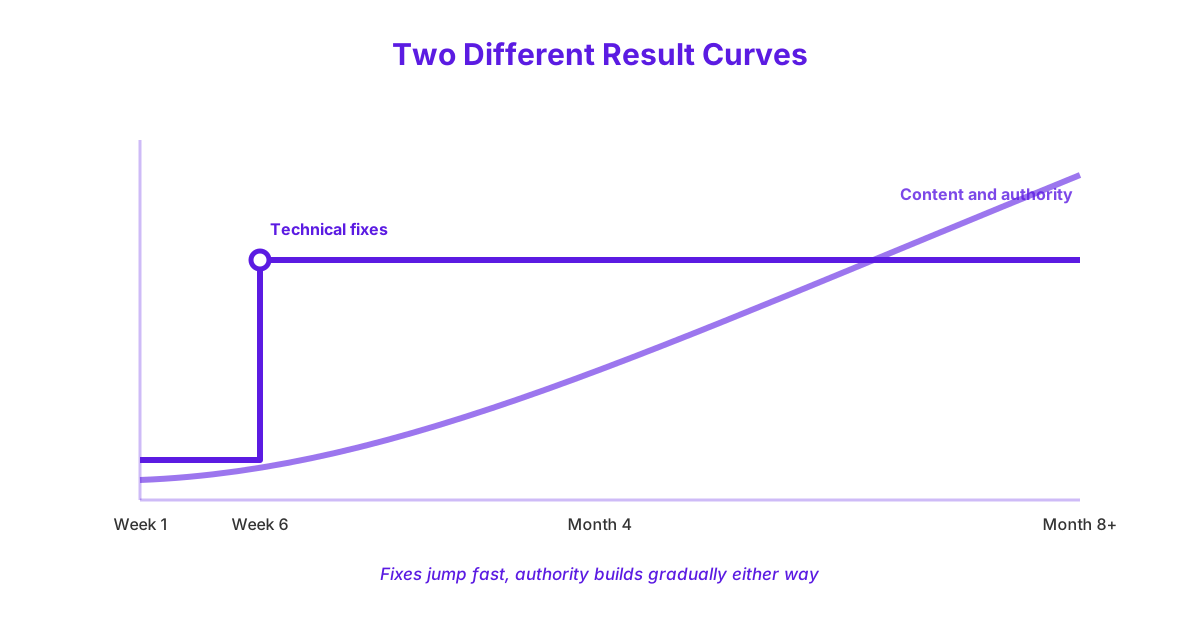
Results timelines differ significantly between the two models because technical fixes tend to show measurable improvement quickly, while content and authority growth take considerably longer regardless of which service model delivers them. Understanding this distinction helps set realistic expectations no matter which model you ultimately choose.
How Fast Technical Fixes Show Results
Technical fixes typically show measurable results within four to eight weeks of implementation, since resolving crawl errors, fixing broken metadata, or repairing schema markup allows Google to properly index and understand pages that were previously being misread or ignored. This is true whether the fix comes from a one-off project or from the technical component of an ongoing retainer, since the underlying mechanism, giving search engines a cleaner, more accurate version of your site, works the same way regardless of the service model delivering it. A site with significant existing technical debt often sees the fastest, most visible improvement from this category of work, precisely because so much low-hanging opportunity was previously going unaddressed.
This speed is one of the strongest arguments for a one-off project when a website’s core problem genuinely is technical, since there’s no need to wait months for ongoing work to compound when the underlying fix itself resolves the issue directly.
Why Content and Authority Growth Take Longer
Content and authority growth take three to six months or longer to show meaningful results because both depend on Google gradually building trust and topical relevance for a website through sustained observation over time, rather than through any single action. A new piece of content needs time to be crawled, indexed, evaluated against competing pages, and given a chance to earn engagement and links before it reaches its ranking potential. This is true regardless of service model, but it’s specifically why retainers exist as a structure, since this kind of gradual, compounding work needs sustained monthly effort rather than a single burst of activity.
A business expecting content and authority-driven ranking improvements within the first month of any SEO engagement, project or retainer is working from an unrealistic timeline that neither model can genuinely deliver on.
A Practical Framework for Deciding Between a Retainer and a Project
The most practical way to decide between a retainer and a project is to answer five specific questions honestly about your own business, rather than relying on general advice about which model is “better.” Your answers to these questions will point clearly toward one model over the other in most cases.
Five Questions to Ask Before You Choose
First, how important is organic search to your business’s overall growth? A business that gets the majority of its leads from referrals or existing relationships has a much weaker case for an ongoing retainer than one whose growth strategy depends primarily on being found in search results. Second, how competitive is your specific market? A niche, low-competition market may only need periodic technical maintenance, while a crowded market with several actively investing competitors typically requires sustained ongoing effort just to maintain position, let alone improve it.
Third, what is the current health of your website? A site with significant unresolved technical issues almost always needs a project first, regardless of your longer-term needs, since ongoing strategy work built on a broken foundation underperforms no matter how well it’s executed. Fourth, what internal capacity do you have? A business with no internal marketing resource to act on recommendations or provide ongoing input may struggle to get full value from a retainer’s flexibility, while a project’s fixed deliverables require less ongoing internal involvement to implement successfully. Fifth, does your growth depend on a steady stream of new content? If the honest answer is yes, this points clearly toward a retainer, since content production is inherently ongoing work that a one-off project structure isn’t designed to sustain.
Checklist: Signs You Need a One-Time SEO Project
The following signs suggest a one-off project is the right fit for your current situation:
- Your website has known technical issues, such as broken links, slow load times, or crawl errors, that need fixing before anything else is worth pursuing.
- You’re migrating to a new website platform, domain, or URL structure and need expert guidance through that specific transition.
- Your budget is fixed and defined, and you need meaningful improvement within that specific, known cost.
- You haven’t worked with an SEO provider before and want to test the value of professional SEO work before committing to an ongoing relationship.
- Your business doesn’t depend heavily on organic search for growth, and occasional technical maintenance is genuinely sufficient for your needs.
- You need a clear, documented audit of your current SEO health to inform an internal decision or a conversation with stakeholders.
Checklist: Signs You Need an SEO Retainer
The following signs suggest an ongoing retainer is the right fit for your current situation:
- You operate in a competitive market where competitors are actively publishing content and building links on an ongoing basis.
- Your growth strategy depends on a steady, sustained stream of new content to build and maintain topical authority.
- You need someone actively monitoring your site’s performance and technical health between scheduled check-ins, not just at fixed intervals.
- Your website’s core technical foundation is already healthy, and the opportunity now lies in sustained growth rather than one-time fixes.
- You want a strategy that can adapt month to month based on real performance data, rather than a fixed scope agreed months in advance.
- Organic search already drives, or is expected to drive, a significant share of your business’s overall leads and revenue.
What Mistakes Do Businesses Make When Choosing SEO Support?
The most common mistakes businesses make when choosing SEO support are buying a retainer before fixing foundational issues, treating a single audit as a complete solution, and choosing based on price alone rather than tracking actual enquiries. Each of these mistakes is avoidable with a small amount of upfront honesty about the business’s actual situation.
Buying a Retainer Before the Foundation Is Fixed
Buying a retainer before fixing foundational technical issues wastes months of ongoing strategy and content work built on top of a website that search engines can’t properly crawl or understand in the first place. A business with broken metadata, unresolved crawl errors, or serious technical debt will see diminished returns from retainer work until those underlying issues are addressed, regardless of how strong the content or strategy is. This is one of the clearest cases where sequencing genuinely matters: fix the foundation first, then invest in ongoing growth work once that foundation is solid.
Treating an Audit as a Complete Solution
Treating a technical audit as a complete solution assumes that identifying and fixing existing problems is enough to drive meaningful growth, when in competitive markets it usually only brings a website back to a healthy baseline. An audit and its associated fixes remove obstacles that were actively holding a site back, but removing obstacles isn’t the same as building an active competitive advantage against businesses that continue investing every month. Businesses expecting an audit alone to produce sustained ranking growth in a competitive market are often disappointed, not because the audit was poorly executed, but because it was never designed to do that particular job.
Choosing Based on Price Alone and Not Tracking Enquiries
Choosing an SEO provider based purely on upfront price, without tracking whether the engagement actually produces qualified enquiries, consistently leads businesses to underinvest in the option that would have delivered better long-term value. A cheaper project or retainer that produces no measurable increase in genuine leads is a worse investment than a more expensive option that reliably generates new business, even though the sticker price comparison alone would suggest otherwise. Industry research, such as HubSpot’s studies on inbound marketing ROI, consistently shows that businesses tracking qualified leads rather than raw traffic make better long-term decisions about their SEO investment, since traffic and cost alone don’t reveal whether an engagement is actually working.
This mistake often compounds with a missing content strategy, since businesses that choose based on price alone frequently also skip the ongoing content investment needed to sustain results, regardless of which service model they chose. Pairing whichever model you choose with a proper content strategy and clear enquiry tracking from day one avoids both mistakes at once.
Can You Start With a Project and Move to a Retainer Later?
Yes, starting with a project and moving to a retainer later is common, and is often the smartest sequencing for businesses uncertain about their website’s current health or their long-term SEO needs. This path lets a business fix foundational issues, evaluate the agency’s work firsthand, and build genuine confidence in SEO’s value before committing to an ongoing monthly cost.
The typical path looks like this: a business starts with a technical audit and fix project, addressing crawl errors, metadata issues, and structural problems that were holding the site back. Once that foundation is solid and the business has seen the agency’s approach and communication style firsthand, moving into a retainer for ongoing content and authority-building work becomes a much lower-risk decision than committing to a retainer from a cold start. This sequencing also naturally answers several of the five framework questions above, since the project itself often reveals how competitive the market actually is and how much ongoing content investment will realistically be needed.
This progression isn’t the only valid path, and plenty of businesses correctly choose a retainer from the outset when their situation clearly calls for it. But for a business genuinely unsure which model fits, starting narrow and expanding based on real evidence is a reasonable, low-risk way to make that decision with more confidence than guessing upfront.
SEO Retainer vs One-Off Project at a Glance
The table below summarises the core decision points covered throughout this article as a quick reference before you make a final decision.
| Factor | Points Toward a Retainer | Points Toward a Project |
|---|---|---|
| Market Competitiveness | Highly competitive, active competitors | Low competition, stable market |
| Website Health | Already healthy, ready for growth work | Significant unresolved technical issues |
| Content Needs | Ongoing content production required | No ongoing content need |
| Budget Structure | Comfortable with recurring monthly cost | Fixed, defined budget preferred |
| Business Stage | Testing SEO already proven valuable | First time working with an SEO provider |
| Internal Capacity | Can engage with evolving monthly strategy | Prefers a fixed, defined scope |
Frequently Asked Questions
What’s the difference between an SEO retainer and a one-time SEO project?
An SEO retainer is ongoing monthly work with continuously adjusted strategy and no fixed end date, while a one-time SEO project is a fixed-scope engagement with a defined start and end point. The retainer suits businesses needing sustained content and authority growth, while the project suits businesses needing specific, finite technical work completed.
Is a one-time SEO project enough for a small business?
Yes, a one-time SEO project is genuinely enough for many small businesses, particularly those with limited technical issues to fix, a low-competition market, or a business that doesn’t depend heavily on organic search for growth. It becomes insufficient specifically when ongoing content production or active competition in a contested market is required to maintain or grow visibility.
When should you choose monthly SEO services over a project?
You should choose monthly SEO services over a project when your market is genuinely competitive, your growth depends on a steady stream of new content, or your business needs active ongoing monitoring rather than periodic check-ins. These situations require sustained, compounding effort that a fixed-scope project isn’t structured to provide.
Should you get an SEO audit before committing to a retainer?
Yes, getting an SEO audit before committing to a retainer is generally a smart precaution, since it reveals whether foundational technical issues exist that would undermine ongoing strategy work if left unaddressed. Skipping this step risks paying for months of retainer work that underperforms simply because the underlying website wasn’t ready for it yet.
Can an agency help you choose the right SEO model for your business?
Yes, a genuinely honest agency can and should help you choose the right SEO model for your business, based on your specific market, website health, and goals rather than steering you toward whichever model happens to be more profitable for them to sell. If an agency only offers one model regardless of your situation, that’s worth treating as a signal to get a second opinion before committing.
Choosing between a retainer and a one-off project comes down to being honest about your business’s actual situation, not picking whichever option sounds more impressive or was pitched most persuasively. If you’d like an honest assessment of which model actually fits where your business is right now, get in touch and talk to us about which model fits your business.