How Long Does It Take to Build a Website?
Business owners asking this question don’t just want a single number; they want to know how to plan around it: when to start, what to prepare, and what might realistically push the date back. This guide gives you a clear, honest timeline breakdown by project type and build path, plus an honest look at what actually causes delays, since most of what pushes a launch date back has nothing to do with how fast your developer works.
How Long Does It Take to Build a Website Overall?
A standard business website typically takes 4 to 8 weeks from initial planning to launch, covering planning and discovery, design, development, content and SEO setup, and testing. This range assumes reasonably prompt content delivery and feedback from the business, which the later sections of this guide cover in detail, since this single factor affects the timeline more than almost anything else.
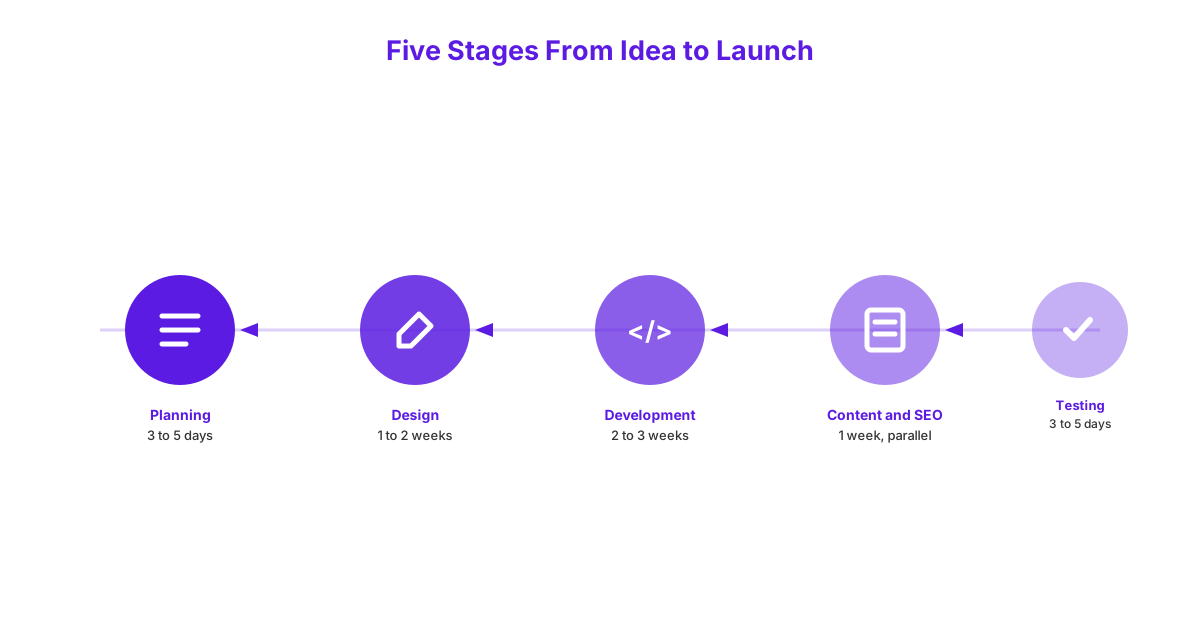
| Stage | Typical Time |
|---|---|
| Planning and Discovery | 3 to 5 days |
| Design | 1 to 2 weeks |
| Development | 2 to 3 weeks |
| Content and SEO Setup | 1 week (often running alongside development) |
| Testing and Launch | 3 to 5 days |
How Does the Build Process Break Down Stage by Stage?
The website build process breaks down into five distinct stages: planning and discovery, design, development, content and SEO setup, and testing and launch. Understanding what actually happens within each stage helps explain why the overall timeline looks the way it does, rather than treating the total number as an unexplained black box.
Planning and Discovery
Planning and discovery typically takes 3 to 5 days and covers defining the website’s goals, mapping out the required pages, and agreeing on the overall structure before any design work begins. This stage involves clarifying exactly what the site needs to achieve, who its target audience is, and which pages and features are genuinely necessary versus nice-to-have additions that can wait for a later phase. Skipping or rushing this stage is one of the most common reasons a project runs into confusion or scope changes later, since decisions made here shape every subsequent stage.
Design
Design typically takes 1 to 2 weeks and covers creating the visual look and layout of the website, usually starting with the homepage and one or two key inner pages before extending the approved style across the rest of the site. This stage usually includes at least one round of client feedback and revision before the design is considered final and ready to move into development. The speed of this stage depends heavily on how quickly the business reviews and responds to design drafts, a theme that recurs throughout every stage of this timeline.
Development
Development typically takes 2 to 3 weeks and covers actually building the website’s functionality, taking the approved design and turning it into a working, interactive site with a content management system, or CMS, behind it. A CMS is the software layer that lets you edit pages, add content, and manage the site afterward without needing to write code yourself, and setting this up correctly is a core part of this stage. Development also includes setting up a staging environment, a private, non-public version of the site used for testing before it goes live, ensuring nothing breaks or displays incorrectly once the site launches publicly.
Content and SEO Setup
Content and SEO setup typically takes about a week, though this stage often runs in parallel with development rather than as a separate sequential block, and covers adding the actual text, images, and basic search engine optimization elements to each page. This includes writing or inserting page copy, adding meta titles and descriptions, and setting up basic technical SEO foundations like an XML sitemap. This stage depends heavily on the business supplying its own content, such as service descriptions, team photos, and product information, promptly, which is covered in detail later in this guide as the single biggest factor affecting overall timeline.
Testing and Launch
Testing and launch typically takes 3 to 5 days and covers quality assurance, commonly abbreviated as QA, meaning systematically checking that every page, link, form, and feature works correctly across different browsers and devices before the site goes live. This stage also includes final checks on page speed, mobile responsiveness, and confirming that analytics and any tracking tools are properly connected before the switch to a live domain. A rushed testing stage is one of the few places genuinely worth protecting from being cut short, since issues caught here are far cheaper to fix than issues discovered by customers after launch.
How Long Does a WordPress Website Take to Build?
A typical WordPress business website takes around 4 to 6 weeks to design and launch, sitting toward the faster end of the overall range covered above. WordPress speeds up certain stages specifically because its existing theme and plugin ecosystem means development doesn’t need to build every piece of functionality entirely from scratch, unlike a fully custom build.
This time saving shows up most clearly in the development stage, where a well-chosen WordPress theme provides a working foundation that a developer can customise and configure, rather than coding page layouts and interactive features from zero. The planning, design, content, and testing stages still take roughly the same amount of time regardless of platform, since these stages depend more on business decisions and content readiness than on the underlying technology. This is why WordPress builds tend to land at the faster end of the general 4 to 8 week range rather than dramatically shorter overall.
How Long Does an eCommerce Website Take to Build?
An eCommerce website typically takes 6 to 12 weeks to build, longer than a standard business website, since online stores require considerably more setup work around products, payments, and order management. This wider range reflects how much store complexity can vary between a business selling a handful of products and one managing hundreds of items with complex variations.
What Adds Time to an Online Store Build
The number of products being listed adds time in direct proportion to catalogue size, since each product typically needs its own photos, description, pricing, and category assignment, meaning a store launching with 20 products moves considerably faster than one launching with 500. Payment integration, connecting the site to a payment processor so customers can actually complete purchases securely, requires careful setup and testing to ensure transactions process correctly and securely every time. Shipping setup, particularly for businesses offering multiple shipping options, rates, or delivery zones, adds meaningful configuration time beyond a simple flat-rate shipping model.
Inventory systems, especially where a store needs to track stock levels accurately or sync with an existing physical or backend inventory system, add both development time and testing complexity. Customer account features, such as order history, saved addresses, or wishlist functionality, add further scope beyond a basic guest-checkout-only store. Each of these factors compounds, meaning a store with high product count, complex shipping, and full account features will land toward the longer end of the 6 to 12 week range, while a simple store with a small catalogue and straightforward shipping can launch closer to the shorter end.
How Long Does a Custom or More Complex Website Take?
A custom-built or highly bespoke website typically takes significantly longer than a standard CMS build, often 3 to 6 months or more, since there’s no pre-built theme or plugin ecosystem to speed up development. Every piece of functionality on a custom site needs to be designed and coded specifically for that project, rather than configuring and customising existing, proven components the way a WordPress build does.
This longer timeline reflects genuinely more development work, not inefficiency, since building bespoke functionality, such as a custom booking system, a unique interactive tool, or deep integration with existing business systems, requires original engineering rather than assembly from existing parts. Businesses considering a custom build should factor this realistic timeline into their planning from the outset, rather than assuming a custom site follows the same schedule as a standard business website simply built with more attention to detail.
Does Building a Website Yourself Take Less Time Than Hiring a Professional?
Building a website yourself using a DIY website builder can take less calendar time to get something live, often just days, but frequently takes longer overall once you account for the learning curve and revisions needed to make it genuinely effective. The honest answer depends on what “done” actually means to you: a technically live website, or one that genuinely converts visitors into customers.
DIY Website Builder Timelines
DIY website builders can produce a live, published website within a few days for someone with no prior experience, since these platforms are specifically designed to minimise the technical learning curve through templates and guided setup. This speed comes with real tradeoffs: a business owner unfamiliar with web design principles often spends considerably more time than expected second-guessing layout choices, fighting template limitations, or discovering only after launch that key pages are missing or poorly structured. The genuine time investment for a DIY build that actually performs well, rather than merely existing, is frequently closer to several weeks once these iterations are accounted for, even though the platform itself allowed a technically live site within days.
What “AI Website in an Hour” Claims Actually Leave Out
“AI website in an hour” marketing claims leave out the genuine strategic work: defining your actual business goals, structuring content that converts visitors into customers, and testing that everything works correctly across devices before real customers ever see it. These tools can genuinely produce a visually reasonable, technically functional website extremely quickly, and that capability itself is real and worth acknowledging fairly. What these claims consistently gloss over is that a fast, AI-generated starting point still needs the same strategic thinking, content accuracy, and conversion-focused structure that any genuinely effective business website requires, meaning the “hour” claim describes the starting point, not the finished, business-ready result.
A business genuinely needing a site that converts visitors into enquiries or sales should treat an AI-generated first draft as a fast starting point worth building on, not a finished product ready to represent the business the moment it’s generated. This isn’t a criticism of AI tools broadly, which have genuine, useful applications in web development, but a direct, honest correction of marketing claims that conflate “technically live” with “actually ready to do its job.”
What Actually Causes Website Projects to Take Longer Than Expected?
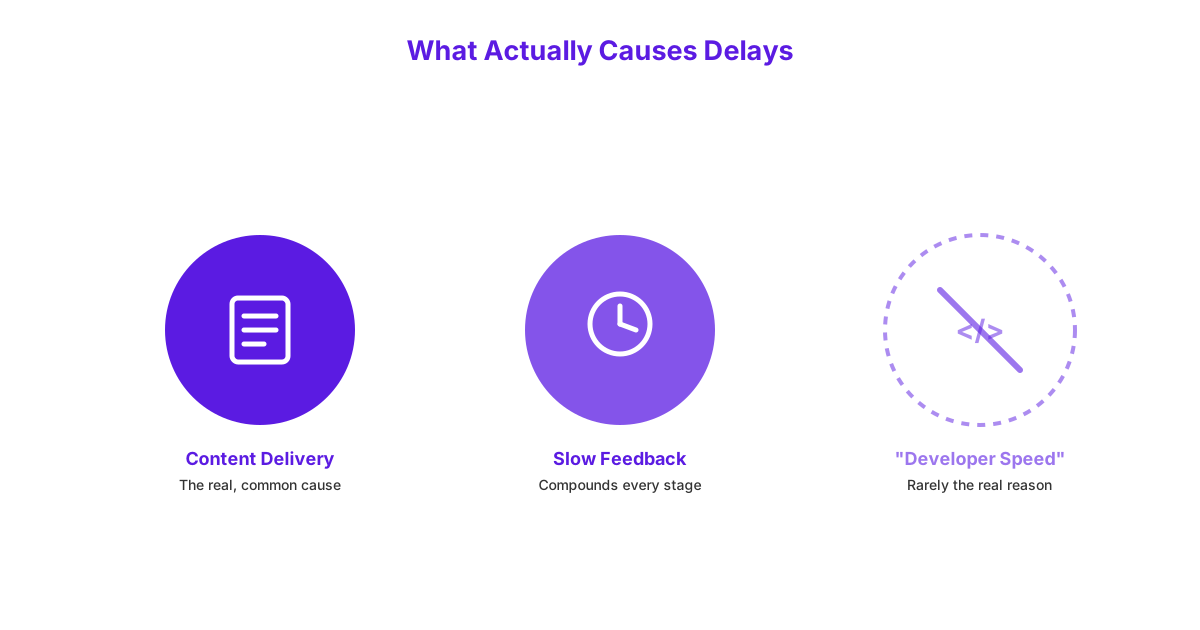
Website projects most commonly take longer than expected due to delayed content delivery from the business itself and slow feedback turnaround during review stages, not developer or agency speed. Most competitor content on this topic vaguely blames “complexity” without naming the actual, specific, and highly common cause, which deserves honest naming upfront so you can plan around it.
Delayed Content Delivery Is the Most Common Cause
Delayed content delivery, meaning the business itself taking longer than expected to supply final text, photos, and product information, is the single most common cause of website projects running past their original timeline. A project can be perfectly on schedule through planning, design, and development, then stall for weeks while waiting on final copy, professional photos, or product details that were supposed to arrive earlier in the process. Industry surveys on website project delivery consistently point to content readiness, not development speed, as the leading cause of delayed launches, reinforcing that this isn’t a criticism unique to any one agency’s process but a widely observed pattern across the industry.
The most effective way to avoid this specific delay is beginning content preparation, writing page copy, gathering photos, and compiling product or service details, at the same time planning and design begin, rather than waiting until development is underway to start this work. Businesses genuinely ready to move quickly benefit from understanding our web design process and exactly what’s needed from their side at each stage, so content preparation happens in parallel rather than becoming the bottleneck that stalls an otherwise well-run project.
Slow Feedback and Revision Rounds
Slow feedback and revision rounds, meaning delays in reviewing and responding to design drafts or development milestones, compound directly with content delays to push a project’s timeline well past its original estimate. A design review that sits unanswered for a week and a half adds that same week and a half directly to the project’s overall timeline, regardless of how quickly the actual design work itself was completed. This effect compounds across multiple review stages, meaning several slow feedback turnarounds throughout a project can add many extra weeks in total, even when each individual delay seems minor in isolation.
Setting a clear expectation upfront for how quickly your business will realistically review and respond at each stage, and treating that commitment seriously once the project begins, is one of the most effective, entirely free ways to keep a project on its original schedule.
Can You Speed Up a Website Build Without Cutting Corners?
Yes, you can speed up a website build without cutting corners, mainly by preparing your content before the project starts and giving fast, clear feedback at each review stage, not by rushing design work or skipping testing. These two levers are entirely within a business’s own control and don’t require compromising on quality anywhere in the actual build process.
Preparing your content in advance, meaning having final page copy, photos, and product or service details ready before development even begins, removes the single most common bottleneck covered above before it has any chance to delay the project. Committing to a fast, specific feedback turnaround, ideally within 48 hours at each review stage, prevents the compounding delay that slow, vague, or delayed feedback consistently introduces. If you’re weighing whether your current site needs a full rebuild or simply a more targeted redesign, since the answer changes which timeline applies to you, not sure if you need a full rebuild or a redesign walks through exactly how to tell the difference before you commit to either timeline.
Website Build Timelines at a Glance
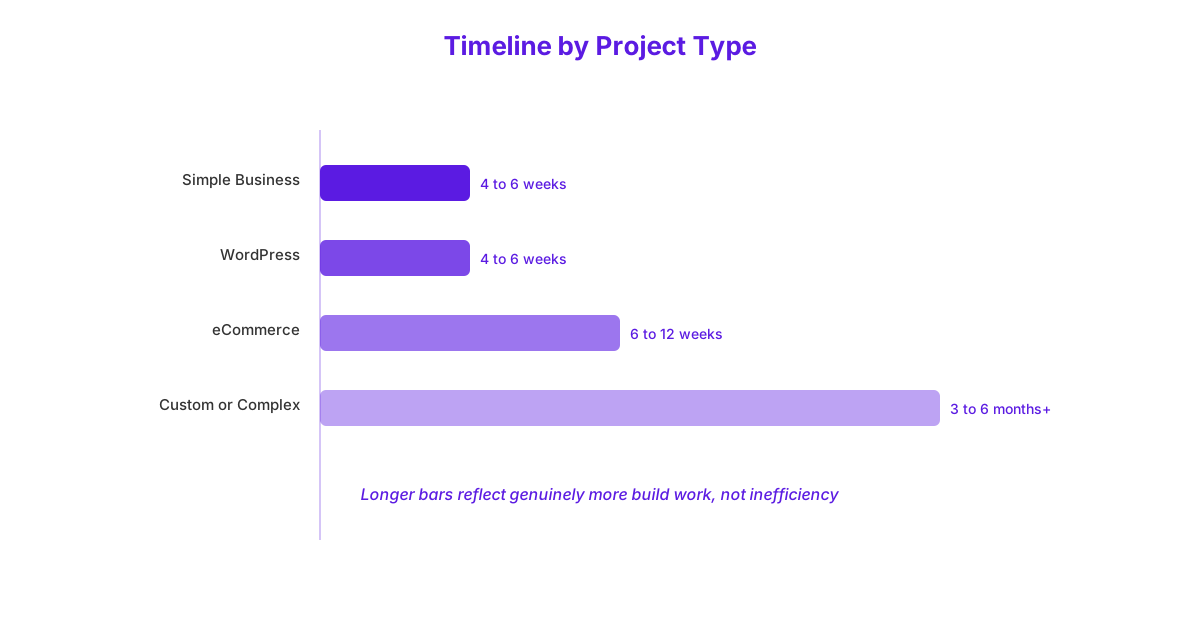
The table below condenses the timelines covered throughout this guide into a single scannable reference by project type.
| Project Type | Typical Timeline | Key Factors |
|---|---|---|
| Simple Business Website | 4 to 6 weeks | Standard pages, minimal custom functionality |
| WordPress Business Website | 4 to 6 weeks | Existing theme ecosystem speeds up development |
| eCommerce Website | 6 to 12 weeks | Product count, payment, shipping, and inventory setup |
| Custom or Complex Website | 3 to 6 months or more | No pre-built ecosystem, fully bespoke development |
Frequently Asked Questions
How long does it take to build a small business website?
A small business website typically takes 4 to 6 weeks from initial planning through to launch, assuming reasonably prompt content delivery and feedback from the business. This timeline covers planning, design, development, content setup, and testing, with WordPress builds generally landing at the faster end of this range.
How long does an eCommerce website take to build?
An eCommerce website typically takes 6 to 12 weeks to build, depending heavily on product catalogue size, payment and shipping complexity, and whether customer account features are included. A simple store with a small product range launches closer to the shorter end, while a large, complex catalogue with custom shipping rules lands toward the longer end.
Can a website be built faster than the typical timeline?
Yes, a website can be built faster than the typical timeline primarily by having all content, text, photos, and product details ready before the project starts, and by providing fast, clear feedback at each review stage. These two factors have a bigger impact on actual delivery speed than almost anything else within a business’s control.
What’s the biggest reason website projects run late?
The biggest reason website projects run late is delayed content delivery from the business itself, not developer or agency speed, since projects frequently stall waiting on final text, photos, or product information. Slow feedback turnaround during design and development review stages is the second most common cause, and the two compound directly when both occur on the same project.
Is it worth using an AI website builder to save time?
An AI website builder can be worth using to quickly generate a starting point, but it’s rarely a complete, business-ready solution on its own for a site that genuinely needs to convert visitors into customers. The fast initial output still typically needs the same strategic content work, conversion-focused structure, and testing that any effective business website requires before it’s genuinely ready to represent the business.
Planning realistically around your website’s actual timeline, rather than an optimistic best-case estimate, is what keeps a project on track and avoids the frustration of an unexpectedly delayed launch. If you’d like a clear, honest timeline estimate for your specific project, get in touch and talk to us about your timeline.
