Instagram vs Facebook: Where Should Your Business Focus?
Facebook has a far larger overall user base than Instagram, but Instagram routinely delivers stronger engagement per post, and more reach doesn’t automatically translate into more actual business results. Business owners with limited time and budget often default to whichever platform feels more familiar or more popular in general, rather than the one that actually matches their specific business and goals. This guide breaks down what each platform genuinely does well, matched to real business types, so your choice is based on your business, not generic platform popularity.
What’s the Core Difference Between Instagram and Facebook for Businesses?
Instagram is a visual-first platform built around discovery and engagement, while Facebook is a community-driven platform built around retention, groups, and broader touchpoints like comments and shares. Instagram’s entire design, from the image-heavy feed to Reels and Stories, prioritises visual content that captures attention quickly, making it particularly effective for businesses with genuinely strong visual products or services. Facebook’s design leans more heavily into ongoing community interaction, through comments, shares, groups, and events, favouring businesses building longer-term relationships and repeat engagement with an established audience.
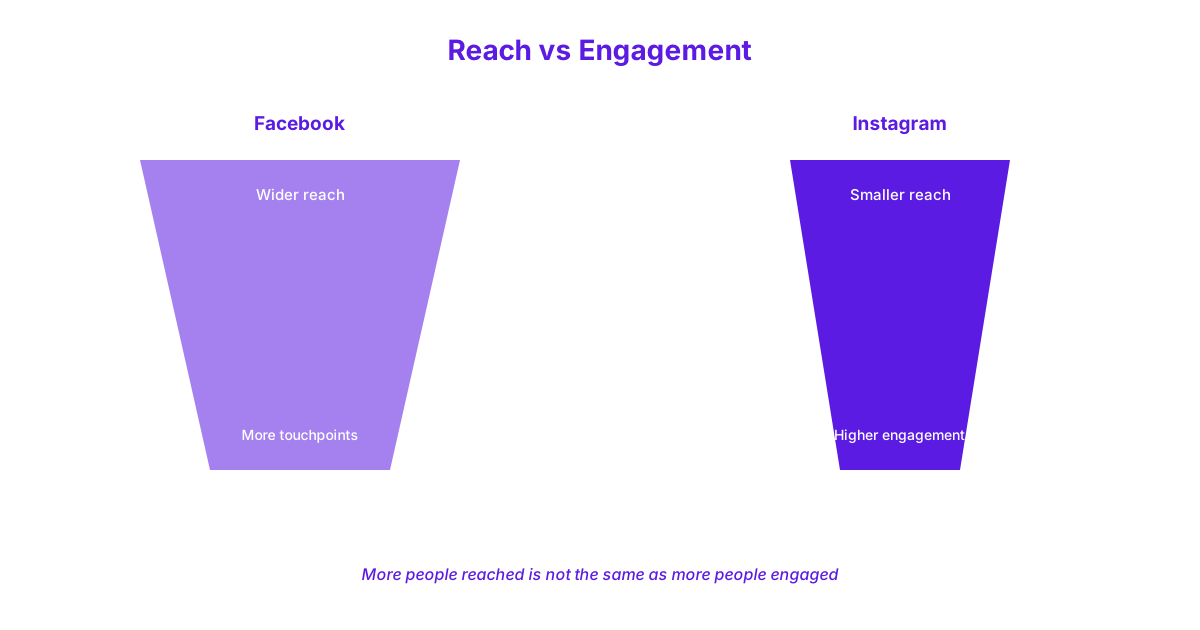
This creates a genuine reach-versus-engagement tradeoff between the two platforms. Facebook’s larger overall user base means posts can potentially reach more people in absolute terms, but Instagram’s engagement rate per post is typically higher, meaning a smaller audience often interacts more actively with your specific content. Neither platform is simply “bigger” or “better,” they’re built around different user behaviours entirely, which is exactly why matching platform choice to your specific business type matters more than defaulting to whichever platform has more total users.
Instagram vs Facebook: Side-by-Side Comparison
Comparing the two platforms side by side makes the practical differences clearer than describing them separately. The table below breaks down how Instagram and Facebook compare across the factors that matter most for a small business deciding where to focus.
| Feature | ||
|---|---|---|
| Platform Focus | Visual discovery and engagement | Community, retention, and broader touchpoints |
| Content Focus | Photos, Reels, Stories | Posts, Groups, events, shared links |
| Best-Performing Features | Reels, Stories, carousel posts | Groups, events, community discussions |
| User Demographics | Skews younger, visually driven audience | Broader age range, including older demographics |
| Engagement Trends | Higher engagement rate per post | Lower engagement rate, but more touchpoint variety |
Which Platform Has Better Engagement Rates?
Instagram typically has higher engagement rates per post than Facebook, particularly among younger demographics who spend more time actively browsing and interacting with visual content. A well-performing Instagram post commonly sees a stronger ratio of likes, comments, and shares relative to its total reach than an equivalent Facebook post reaches. This makes Instagram particularly effective for businesses wanting strong interaction on individual pieces of content rather than simply maximising total audience size.
Facebook, despite typically lower per-post engagement rates, offers more overall touchpoint variety through comments, shares, Groups, and events, which can add up to meaningful cumulative engagement across a broader set of interaction types. A business running an active Facebook Group alongside its main page, for example, can generate substantial ongoing engagement that wouldn’t show up in a simple post-by-post engagement rate comparison. Judging the two platforms purely on a single engagement metric misses this broader picture of how differently engagement actually accumulates on each one.
Which Platform Is Right for Your Type of Business?
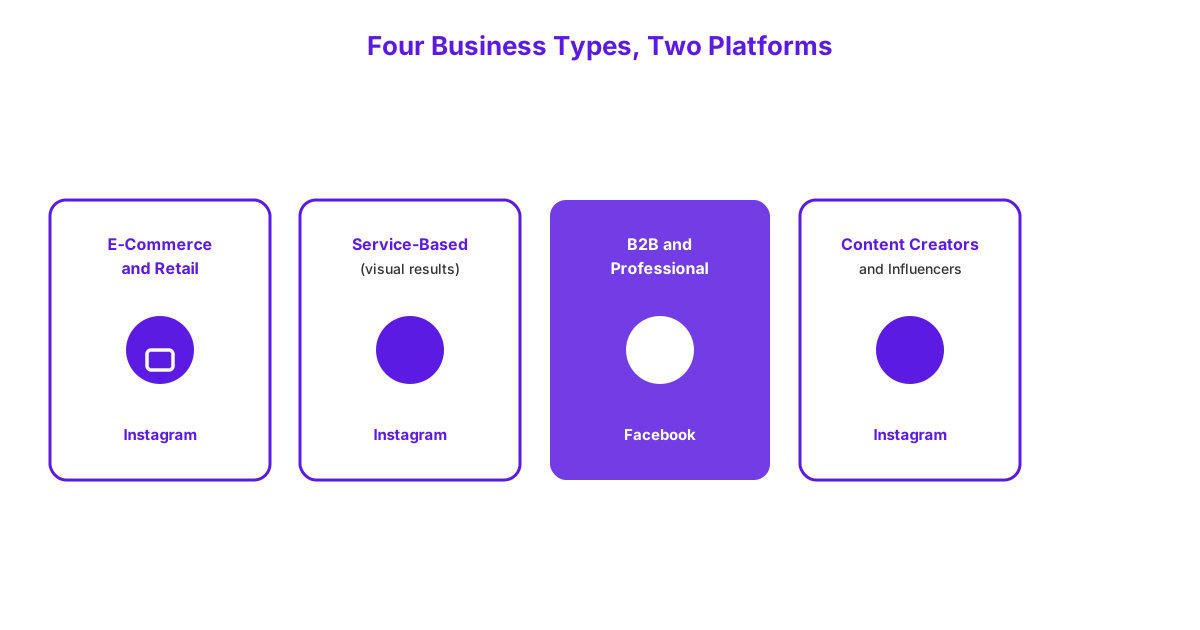
The right platform for your business depends on whether you’re e-commerce or retail, a service-based business, B2B or professional services, or a content creator or local influencer, since each of these business types aligns naturally with one platform’s strengths more than the other. Matching your business type honestly against these categories gives a much clearer starting point than general platform popularity.
E-Commerce and Retail
E-commerce and retail businesses are generally best served by prioritising Instagram, since its visual-first format and shopping features directly support product discovery and purchase intent. Instagram’s Shopping tags, product tagging within posts and Reels, and visually-driven Explore page all work specifically in favour of businesses with genuinely photogenic products, letting potential customers browse and purchase in a naturally visual way. A retail business selling clothing, jewellery, or home goods will typically find Instagram’s format aligns more closely with how customers actually browse and discover new products.
This doesn’t mean Facebook should be ignored entirely, since Facebook Marketplace and Facebook Shops offer their own e-commerce functionality, but Instagram generally deserves the primary focus and content investment for genuinely visual retail products.
Service-Based Businesses
Service-based businesses, such as hairdressers, personal trainers, or home improvement contractors, are often well served by both platforms, though the right emphasis depends on whether the service itself is visually demonstrable. A hairdresser or beauty business, where the actual result of the service is highly visual, benefits significantly from Instagram’s format, showing before-and-after transformations and finished work. A service business that’s less inherently visual, such as a plumbing or accounting business, often finds Facebook’s community and local group presence more valuable for building the kind of local trust and word-of-mouth these services depend on.
The key distinguishing question for a service-based business is whether the actual outcome of the service can be shown compellingly in a photo or short video, which points toward Instagram, or whether the business relies more on local reputation and community trust, which points more toward Facebook.
B2B and Professional Services
B2B and professional services businesses, such as accountants, solicitors, and consultancies, are generally better served by neither Instagram nor Facebook as a primary platform, though Facebook edges ahead when a social presence beyond LinkedIn is genuinely needed. These businesses typically see limited direct value from Instagram’s visual-first format, since professional services rarely lend themselves to compelling visual content in the way retail or hospitality naturally does. Facebook can still play a supporting role for B2B businesses through local business groups, community visibility, and maintaining an accessible, findable business presence for potential clients researching a company.
Most B2B and professional services businesses are better served prioritising LinkedIn as their primary social platform, with Facebook as a secondary, lower-effort presence rather than treating either Instagram or Facebook as the main channel.
Content Creators and Local Influencers
Content creators and local influencers are almost always best served by prioritising Instagram, since its Reels format, Explore page discovery, and creator-focused features are specifically built around growing an audience through content rather than existing relationships. Instagram’s algorithm actively surfaces content to new, non-following audiences at a much higher rate than Facebook’s, making it considerably more effective for creators and influencers focused on audience growth rather than deepening engagement with an already-established following. A local food or lifestyle content creator building a following from scratch will typically see faster growth and more discovery through Instagram than through an equivalent effort on Facebook.
Which Platform Suits Your Industry Specifically?
Different Irish industries genuinely suit different platforms based on how visual the industry naturally is and how much it depends on community trust versus visual discovery. The table below matches platform fit against industry categories directly relevant to the Irish SME market.
| Industry | Better Fit | Why |
|---|---|---|
| Hospitality and Tourism | Highly visual, benefits from discovery-driven browsing | |
| Retail and Fashion | Visual products suit shopping tags and Explore discovery | |
| Food and Beverage | Strong visual appeal, Reels perform particularly well | |
| Professional Services | Community trust and local visibility matter more than visuals | |
| Trades and Construction | Local groups and word-of-mouth drive most enquiries | |
| Health and Fitness | Both | Instagram for transformations and content, Facebook for community |
| Real Estate | Both | Instagram for property visuals, Facebook for local community reach |
Choosing the right platform for your specific industry is only the starting point. If you’d like help building out a platform strategy built around your business rather than guessing from a general industry table, that’s exactly the kind of tailored approach worth investing in once you’ve confirmed the right direction.
How Do You Match a Platform to Your Business Goal?
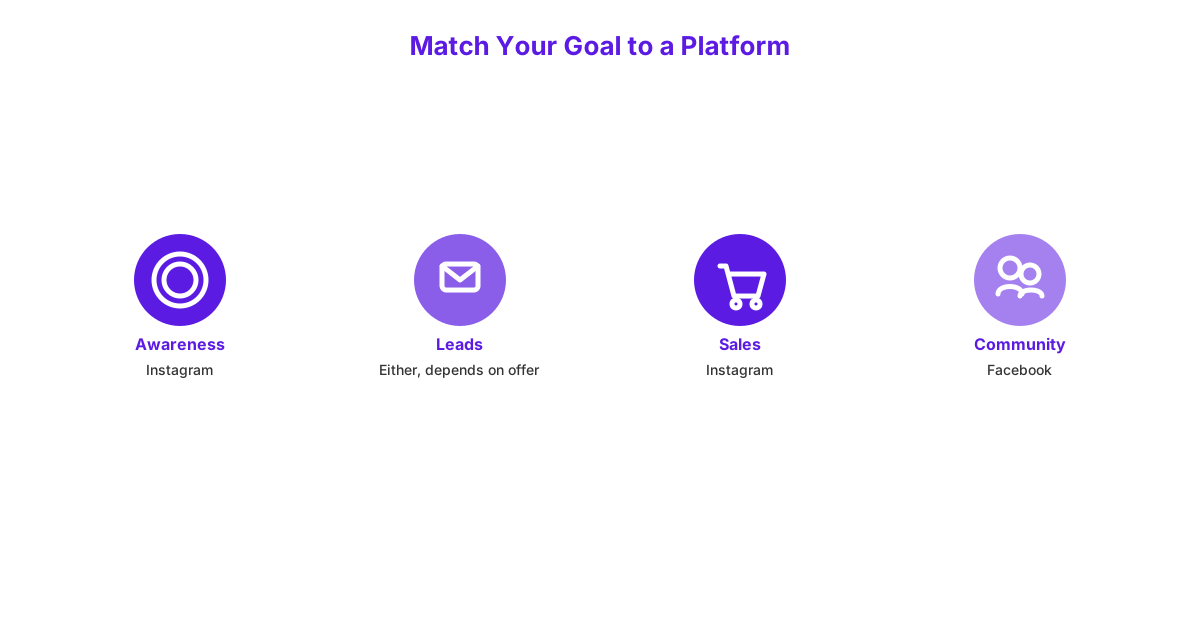
Matching a platform to your business goal means choosing based on whether you’re building brand awareness, generating leads, driving social selling, or building community and loyalty, since these four goals each favour a different platform and content approach. Business type and business goal don’t always point the same direction, making this a genuinely separate consideration worth working through deliberately.
Building Brand Awareness
Building brand awareness is generally better served by Instagram, since its Explore page and Reels format are specifically designed to surface content to people who don’t yet follow your business. A new business trying to build initial recognition benefits from Instagram’s discovery-driven algorithm reaching cold audiences more readily than Facebook’s, which tends to favour content shown primarily to people already connected to your page. Consistent, visually strong content posted regularly on Instagram builds awareness more efficiently for most businesses than an equivalent effort on Facebook.
Generating Leads and Conversions
Generating leads and conversions can work well on either platform, though the right choice depends on whether your offer is genuinely visual or benefits more from detailed written context Facebook accommodates well. Instagram’s shorter-form, visual content suits businesses where a strong image or short video alone can prompt someone to enquire. Facebook’s format allows for longer captions and more detailed post content, which suits businesses whose offer benefits from more explanation before a potential customer is ready to convert.
Increasing Sales Through Social Selling
Increasing sales through social selling is generally better served by Instagram for physical products, given its shopping tags and visually-driven browsing experience, though Facebook Marketplace offers a genuine alternative worth considering for certain product categories. Instagram’s shopping features integrate directly into the natural scrolling and discovery experience, letting a potential customer move from seeing a product to purchasing with minimal friction. Facebook Marketplace works particularly well for local, often second-hand or locally-sourced goods, where proximity and local community trust matter as much as the product photo itself.
Building Community and Loyalty
Building community and loyalty is generally better served by Facebook, since Groups, events, and comment-heavy discussions are specifically designed to deepen ongoing relationships with an existing audience rather than reach new people. A business running an active Facebook Group for existing customers, sharing updates, answering questions, and fostering discussion among members, builds a level of ongoing loyalty that Instagram’s more discovery-focused format doesn’t replicate as naturally. Businesses whose growth depends heavily on repeat business and word-of-mouth referral often find this community-building function more valuable than pure reach or discovery.
What Are the Common Challenges on Each Platform?
Instagram and Facebook each present genuine challenges that businesses should understand honestly before committing significant time to either platform. Neither platform is without friction, and knowing these challenges upfront helps set realistic expectations.
Instagram’s Challenges
Instagram’s biggest challenge is the ongoing production demand for consistently strong visual content, since the platform’s entire format depends on genuinely good photography, video, or graphic design to perform well. A business without access to decent photography or video, or without the time to produce this content consistently, will struggle to gain traction regardless of how good the underlying product or service actually is. Instagram’s algorithm also changes frequently, meaning strategies and content formats that performed well a year ago may not perform as well today, requiring businesses to stay reasonably current with platform changes.
Facebook’s Challenges
Facebook’s biggest challenge is declining organic reach, meaning posts from business pages reach a shrinking percentage of followers without paid promotion, making it increasingly difficult to build visibility through organic content alone. Independent platform benchmarks, such as Hootsuite’s annual social media trends report, have consistently tracked declining organic reach on Facebook in recent years, which is why paid support increasingly matters for businesses wanting reliable visibility on the platform. This means a Facebook strategy built purely around free, organic posting is likely to underperform compared to a strategy that incorporates at least some paid promotion or a genuinely strong content and community strategy that earns engagement despite the reach decline.
Businesses serious about overcoming this organic reach challenge on Facebook often need a stronger content strategy built around genuinely shareable, discussion-worthy content, since generic promotional posts are exactly the kind of content most affected by the platform’s declining organic reach.
Should You Use Both Instagram and Facebook Together?
Yes, most businesses should use both Instagram and Facebook together, since the two platforms serve overlapping but genuinely distinct roles rather than being a strict either/or choice. Instagram and Facebook are also owned by the same parent company and share advertising infrastructure, making it straightforward to run coordinated campaigns across both from a single ad account.
The right approach for most small businesses is choosing a primary platform based on the business-type and goal-matching covered throughout this guide, then maintaining a lighter, secondary presence on the other platform rather than abandoning it completely. A retail business might invest most of its content effort into Instagram while still maintaining an active Facebook page and Group for community engagement and Marketplace listings. This combined approach captures the specific strengths of each platform without requiring the full, undivided effort that trying to excel equally on both simultaneously would demand from a small team with limited time.
How Do You Know Where Your Audience Actually Is?
You know where your audience actually is by checking platform analytics such as Meta Insights, reviewing Google Analytics referral data showing which platform actually drives website traffic, and directly asking customers through simple surveys, rather than assuming based on general platform popularity. Meta Insights, available for both Instagram and Facebook business accounts, shows exactly which platform your specific existing audience engages with more actively, providing real, business-specific data rather than a general assumption.
Google Analytics referral data reveals which platform is actually sending visitors to your website, which matters more than raw engagement numbers if your ultimate goal is driving traffic and conversions rather than social engagement for its own sake. Directly asking customers, whether through a simple question on your contact form or a quick conversation at the point of sale, adds a genuinely useful qualitative layer to the quantitative data from analytics tools. Combining these three sources gives a considerably more reliable picture of where your specific audience actually is than guessing based on which platform feels more popular in general.
Instagram vs Facebook at a Glance
The table below condenses the business-type and goal-matching guidance covered throughout this article into a single scannable reference.
| Business Type | Better Fit | Why |
|---|---|---|
| E-Commerce and Retail | Visual discovery and shopping features suit product browsing | |
| Service-Based (Visual Results) | Before-and-after and finished work showcase well | |
| Service-Based (Trust-Based) | Local community and word-of-mouth matter more than visuals | |
| B2B and Professional Services | Facebook (secondary to LinkedIn) | Limited visual content fit, community presence still useful |
| Content Creators and Influencers | Stronger discovery algorithm for audience growth |
Frequently Asked Questions
Should a small business use Instagram or Facebook first?
A small business should generally use Instagram first if its products or services are genuinely visual, such as retail, food, or hospitality, and Facebook first if it depends more on local community trust, such as trades or professional services. The right starting platform depends on matching your specific business type against the guidance in this article rather than defaulting to whichever platform feels more familiar.
Which platform has better engagement rates?
Instagram typically has better engagement rates per post than Facebook, particularly among younger demographics who interact more actively with visual content. Facebook offers more overall touchpoint variety through comments, shares, and Groups, which can add up to meaningful engagement even with a lower per-post rate.
How do I know where my audience is?
You know where your audience is by checking Meta Insights for both platforms, reviewing Google Analytics referral data to see which platform drives actual website traffic, and directly asking customers through a simple survey or conversation. Combining these three sources gives a far more reliable answer than assuming based on general platform popularity.
Is Facebook still worth using for businesses in 2026?
Yes, Facebook is still worth using for businesses in 2026, particularly for community building, local visibility, and Groups, even though organic reach has declined significantly in recent years. Businesses relying on Facebook for visibility increasingly need to incorporate paid promotion or genuinely engaging, shareable content rather than expecting organic posts alone to perform as well as they once did.
Can Instagram and Facebook ads be run from the same campaign?
Yes, Instagram and Facebook ads can be run from the same campaign, since both platforms share the same underlying Meta advertising infrastructure and can be managed from a single ads account. This allows a business to test which platform performs better for a specific campaign goal without managing two entirely separate advertising systems.
Choosing between Instagram and Facebook comes down to honestly matching your specific business type and goals against what each platform genuinely does well, not defaulting to whichever platform feels more familiar or more popular in general. If you’d like help building the right platform strategy for your specific business, get in touch and talk to us about your social media strategy.

