Blog Writing Tips for SEO: How to Write Content That Actually Ranks
Most advice on writing SEO blog content is either outdated keyword-stuffing tactics from a decade ago or a vague checklist telling you to “write compelling titles” without ever showing what that actually looks like. This guide gives you practical, example-driven tips covering structure, keywords, and the newer requirement of writing for AI answer engines, not just traditional search rankings. Every tip below comes with a real, worked example rather than an abstract description of best practice.
Why Does Blog SEO Still Matter in 2026?
Blog SEO still matters in 2026 because organic blog content remains one of the most cost-effective ways to build lasting search visibility, and increasingly, that same content also feeds AI answer engines like ChatGPT and Google’s AI Overviews. A well-written blog post keeps generating traffic and enquiries for years after publication without any ongoing spend, unlike paid advertising, which stops the moment you stop paying. This compounding value hasn’t changed, even as the destinations for that content, traditional search results and AI-generated answers, have expanded.
What has changed is that the same blog post now needs to work for two audiences simultaneously: human readers scanning search results, and AI models scanning for a direct, quotable answer to extract. Writing that satisfies both, rather than optimising purely for one, is what actually produces content that ranks and gets cited in 2026.
How Do You Choose the Right Keywords for a Blog Post?
You choose the right keywords for a blog post by researching what your actual audience is searching for, then placing those terms naturally throughout the post rather than forcing them in repeatedly. Getting this step right shapes everything else about the post, since it determines which searches your content has any chance of appearing for at all.
Researching What Your Audience Is Actually Searching For
Researching what your audience is actually searching for starts with typing your general topic into Google and reading the “People Also Ask” box and the related searches at the bottom of the results page, both of which reveal real, current search demand for free. Google Search Console, once your website has been live for a few months, shows you the exact search terms already bringing traffic to your existing pages, including phrases you may not have deliberately targeted. Free tools like Google Keyword Planner add estimated search volume on top of this, helping you judge whether a specific phrase is worth building a full post around.
Customer questions, whether from sales calls, support emails, or comments on previous posts, are consistently the richest and most underused source of real keyword ideas, since they represent topics already proven to matter to actual people rather than guessed at from a keyword tool alone.
Where to Naturally Place Keywords in Your Post
Keywords belong naturally in your headline, at least one subheading, your introduction and conclusion, and your meta description, without forcing the exact phrase to repeat unnaturally throughout the body. A post targeting “how to lower Facebook ad costs” should include that phrase or a close variation in the H1, appear again in at least one H2, and show up naturally within the first hundred words. Beyond these key placements, natural variations and related phrases, such as “reduce Facebook advertising spend” or “cut Facebook ad costs,” serve the content better than repeating the exact same phrase mechanically throughout every paragraph.
Modern search engines and AI models both read for topical relevance and natural language patterns, not exact keyword density, meaning content that reads naturally to a human almost always performs better than content stuffed with forced repetition of a single phrase.
How Should You Structure a Blog Post for SEO?
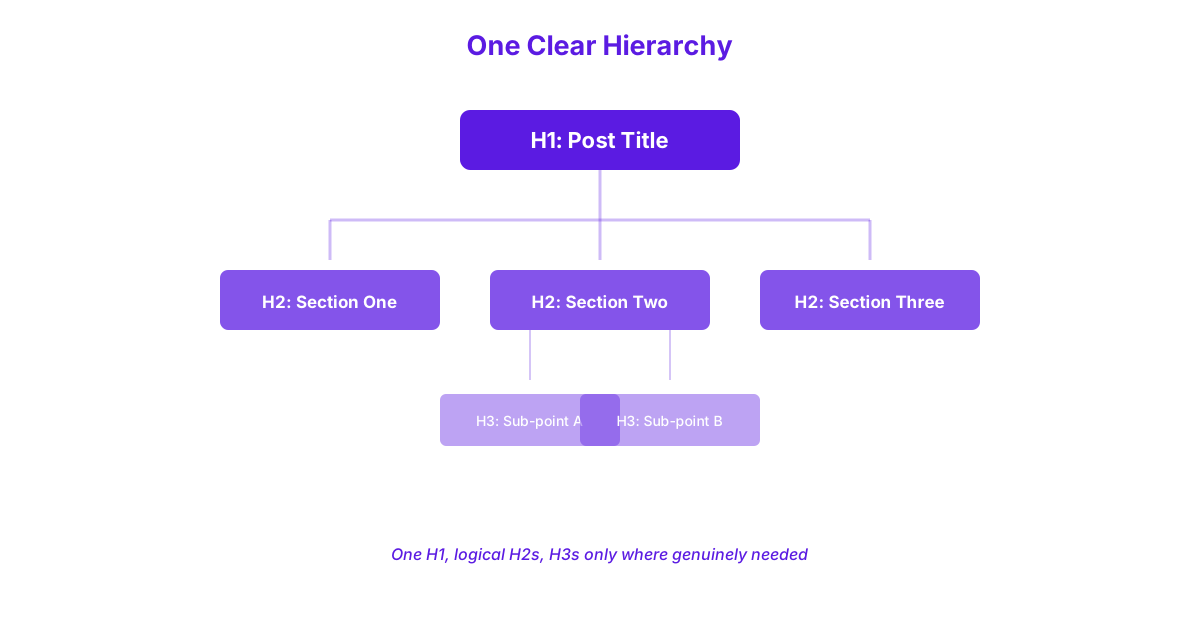
You structure a blog post for SEO using a single H1, a clear hierarchy of H2 and H3 subheadings, and formatting that prioritises readability over dense blocks of text. This structure helps both human readers scanning for relevant sections and search engines or AI models trying to understand what each part of your content actually covers.
Using a Single H1 and Clear H2/H3 Hierarchy
Using a single H1 per post, matching your main title, followed by a logical hierarchy of H2s for major sections and H3s for supporting subsections, gives both readers and search engines a clear map of your content’s structure. A post with multiple H1 tags or a chaotic mix of heading levels confuses this structure, making it harder for a search engine to understand which section is truly the primary topic versus a supporting detail. Each H2 should represent a genuinely distinct subtopic, with H3s used only when a section needs further breakdown, rather than treating every few paragraphs as an excuse to add another heading.
This hierarchy also directly supports how AI models extract information, since a clear, logical heading structure makes it far easier for an AI system to identify which specific section answers a specific question a user might ask.
Formatting for Readability: Short Paragraphs, Bullets, and White Space
Formatting for readability means using short paragraphs of two to four sentences, bullet points for genuinely list-like information, and enough white space that the page doesn’t feel like a dense wall of text. Long, unbroken paragraphs are harder to scan on any device, but the problem is particularly pronounced on mobile, where most readers now encounter blog content and where dense text blocks feel especially overwhelming. Bullet points work best for genuinely enumerable information, such as a list of steps or features, rather than being used to artificially break up prose that doesn’t actually contain a list.
Generous white space between sections, achieved simply through consistent paragraph breaks and heading spacing, makes a page feel more approachable and easier to scan, which keeps readers on the page longer and reduces the bounce rate that comes from an intimidating wall of text.
How Do You Write a Title That Ranks and Gets Clicked?
You write a title that ranks and gets clicked by including your target keyword naturally while also giving the reader a specific, concrete reason to click through rather than a vague, generic description. A title needs to satisfy both search engines looking for keyword relevance and human readers deciding whether your result is worth clicking among several similar options.
A Before and After Example of a Weak vs Strong Title
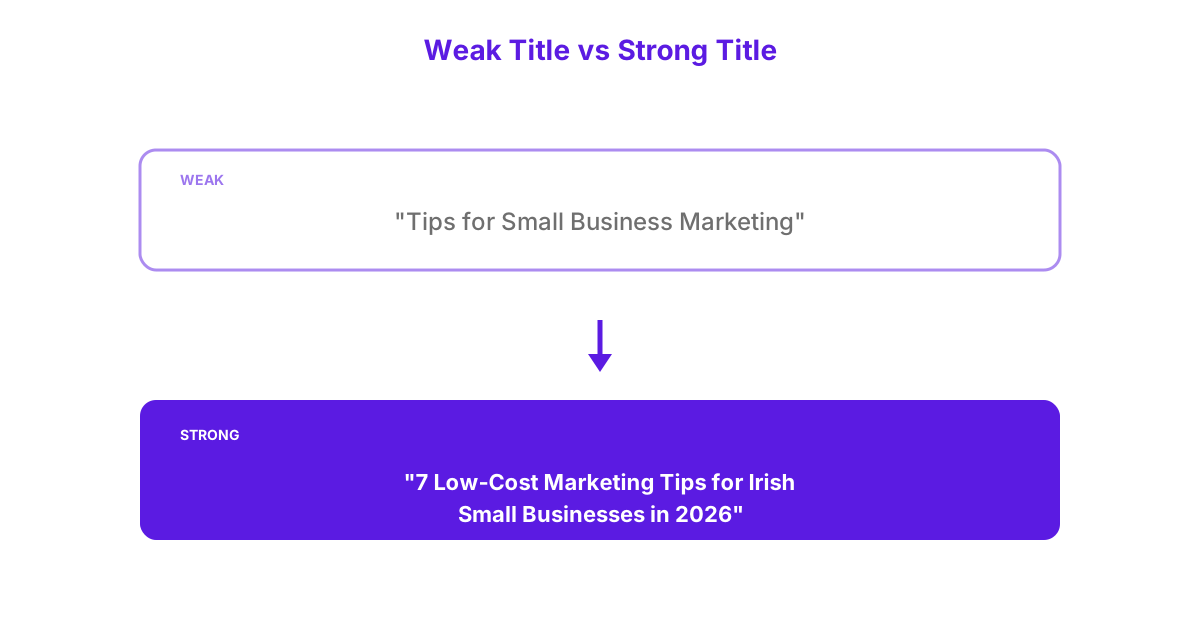
A weak title like “Tips for Small Business Marketing” fails because it’s generic enough to describe thousands of other articles, gives no indication of what specific value the post actually delivers, and doesn’t clearly target any particular search phrase a real person would type. A strong rewrite of the same topic, “7 Low-Cost Marketing Tips for Irish Small Businesses in 2026,” succeeds because it includes a specific number, a clear target audience, a relevant timeframe, and language matching how someone might actually search for this exact topic. The specific number and year signal concrete, current value, while “Irish small businesses” narrows the audience precisely enough that the right reader immediately recognises the post is written for them specifically.
This same principle applies across any topic: a title should always answer the implicit question “what will I specifically get from clicking this,” rather than describing the general subject area in vague terms that could apply to almost any article on the topic.
How Do You Write an Effective Meta Description?
You write an effective meta description by summarising the post’s specific value within roughly 150 to 160 characters, using language that matches what a searcher is looking for rather than generic marketing copy. The meta description doesn’t directly influence rankings, but it strongly influences whether someone clicks your result once they see it in search.
A Worked Example With Character Count Guidance
A worked example of an effective meta description, for a post about lowering Facebook ad costs, reads: “Facebook ad costs climbing? Learn 6 proven ways to lower your cost per click without cutting reach, with real examples from Irish campaigns.” This example runs 140 characters, sitting just under the 150 to 160 character range, giving comfortable room to display fully in search results without being cut off with an ellipsis. It works because it opens with a direct question matching the reader’s likely frustration, promises a specific number of solutions, and adds a concrete, credible detail, real examples from Irish campaigns, that a generic description wouldn’t include.
Meta descriptions should be written specifically for each individual post rather than reused as a generic template across multiple pages, since a description that could apply to any post on your site gives a searcher no specific reason to choose your result over a competitor’s. If building this kind of specific, conversion-focused content consistently across every post feels like a lot to manage alongside everything else, it’s worth approaching as part of our content marketing service, covering this level of detail across a full content strategy rather than post by post in isolation.
Should You Write Content Based on the Questions Readers Actually Ask?
Yes, structuring your blog content around the real questions readers actually ask both helps human readers find exactly what they’re looking for and improves how easily your content gets cited by AI answer engines. Sections built around genuine questions, the kind that show up in Google’s “People Also Ask” box and in AI-generated answers, directly mirror how people are actually searching and asking, rather than how a business might describe its own content internally.
A section titled “Reducing Customer Churn” is a topic label, not a question, while a section titled “How Do You Reduce Customer Churn in a Subscription Business?” mirrors exactly how someone would type this into Google or ask an AI assistant. This phrasing shift costs nothing in terms of content quality but significantly improves how well the section matches real search queries and AI-generated prompts. Building an entire post around a series of genuine, question-phrased sections, each answering one specific thing completely, consistently outperforms a post organised around vague, topic-label headings that don’t map to how anyone actually searches.
How Do You Build E-E-A-T Into a Blog Post?
You build E-E-A-T, meaning Experience, Expertise, Authoritativeness, and Trustworthiness, into a blog post by including genuine personal experience, credible expert input, and properly sourced information rather than generic, unsupported claims. Google explicitly looks for these signals when evaluating content quality, making this far more than an abstract quality guideline.
Personal Experience, Expert Quotes, and Credible Sources
Personal experience, such as describing a real client result, a specific mistake you’ve seen repeatedly, or a genuine before-and-after outcome, signals authenticity in a way that generic, interchangeable advice never can. Including expert quotes, whether from your own team’s specific expertise or a credible external source, adds a layer of authoritativeness that pure opinion or unsupported claims lack on their own. Citing credible sources for statistics or claims, rather than stating figures without attribution, builds the trustworthiness component that both readers and search engines weigh when evaluating content quality.
Google’s own Search Central guidance on helpful content explicitly names experience and expertise as signals it looks for, which is why personal insight and credible sourcing matter more than keyword density alone. A blog post written from genuine, specific experience in your industry will consistently outperform a generic, keyword-optimised post with no real substance behind it, even if the generic post is technically better optimised on paper.
How Do You Write Blog Content That AI Engines Can Also Use?
You write blog content that AI engines can also use by leading every section with a direct, complete answer rather than a long build-up that delays the actual point. AI models extract and cite content that gives them a clean, standalone answer to quote, and a slow, meandering introduction before the actual answer works against this goal.
Leading With Direct Answers Instead of Long Build-Ups
Leading with direct answers means the very first sentence under any heading should fully answer that heading’s implied question, with elaboration, context, and nuance following afterward rather than before. A section that opens with “There are many factors to consider when thinking about email marketing frequency” delays the actual answer and gives an AI model nothing concrete to extract from that opening sentence. A section that instead opens with “Most small businesses should email their list once every one to two weeks” gives both a human reader and an AI model an immediately usable, standalone answer before any further explanation follows.
This single habit, answer first, elaborate after, is the most impactful individual change most writers can make to improve how their content performs with AI answer engines specifically. If you’re building a broader content approach around this kind of AI-aware writing consistently, it’s worth exploring how we approach SEO and content together, since this discipline works best applied consistently across an entire site rather than to a single post in isolation.
What Other On-Page Details Affect Blog SEO?
Several smaller on-page details, image alt text, internal linking, and URL structure, each contribute meaningfully to blog SEO even though none of them individually carries as much weight as strong content and structure. Getting these details right consistently across every post adds up to a genuinely stronger overall SEO foundation.
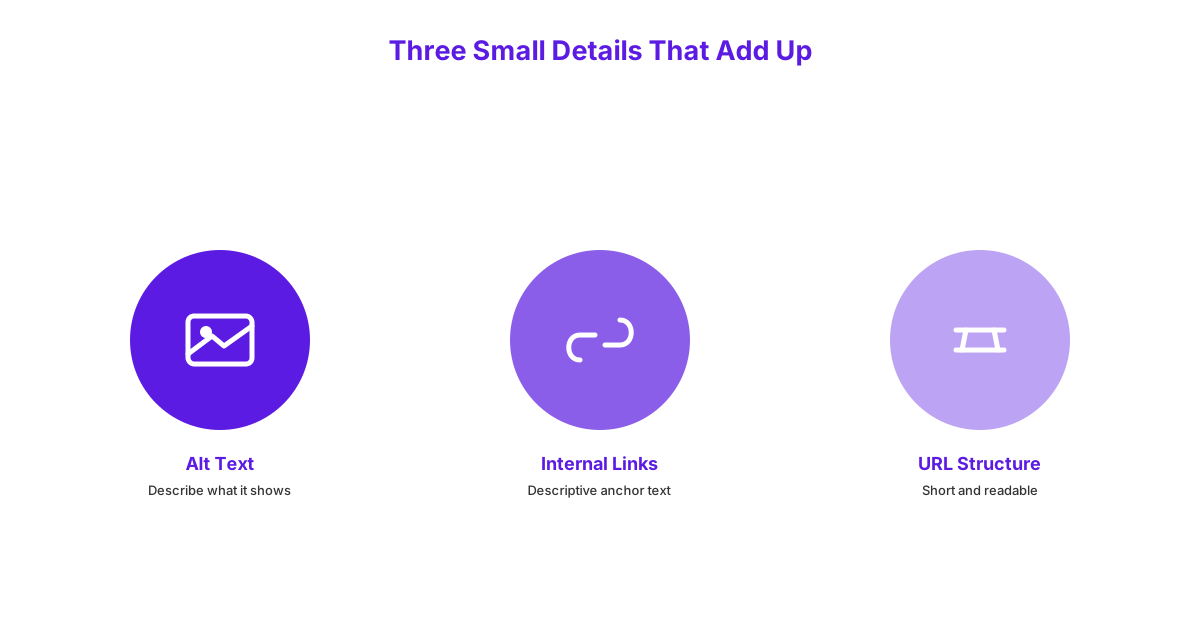
Image Alt Text and File Names
Image alt text, the written description attached to an image for accessibility and search purposes, should describe what the image actually shows using natural language rather than a generic label like “image1” or a keyword-stuffed description. An image showing a completed kitchen renovation might use alt text like “modern white kitchen renovation with island unit in Galway,” describing the actual content specifically rather than simply repeating your target keyword unnaturally. File names matter too: an image saved as “kitchen-renovation-galway.jpg” gives search engines additional relevant context that a generic file name like “IMG4821.jpg” does not.
Internal Linking With Descriptive Anchor Text
Internal linking with descriptive anchor text means linking to other relevant pages on your site using text that describes the destination page, rather than generic phrases like “click here” or “read more.” A link using the anchor text “our guide to Facebook ad targeting” tells both readers and search engines exactly what to expect at the destination, while “click here” provides no useful context to either audience. Every blog post should include a small number of genuinely relevant internal links, connecting related content and helping both readers and search engines understand how your content fits together as a coherent whole.
URL Structure
URL structure should be short, readable, and include your target keyword, avoiding long strings of numbers or irrelevant parameters that convey no information about the page’s content. A bad URL like “yoursite.com/blog/post?id=48291&cat=12” tells a reader or search engine nothing about what the page actually covers. A good URL like “yoursite.com/blog/lower-facebook-ad-costs” is immediately readable, clearly describes the topic, and includes the relevant keyword phrase naturally within the structure itself.
Should You Update Old Blog Posts to Keep Them Ranking?
Yes, updating old blog posts by refreshing outdated statistics, fixing broken links, and expanding thin sections is often faster and more effective than only ever publishing new content. An existing post already has some accumulated authority and ranking history, meaning a meaningful update can produce a ranking improvement considerably faster than starting an entirely new post from zero.
Posts referencing outdated statistics or past years, broken external links, or sections that were originally thin and underdeveloped are the clearest candidates for this kind of refresh. Reviewing your best-performing older content every six to twelve months, updating anything that’s become stale, and expanding any sections that competitor content now covers more thoroughly keeps existing assets working rather than slowly losing relevance and rankings over time. This ongoing maintenance is just as valuable as new content production, and often considerably less time-consuming per unit of ranking improvement gained.
Blog SEO Writing Checklist at a Glance
The table below condenses this entire guide into a single scannable checklist you can run through before publishing any post.
| Element | What to Do | Why It Matters |
|---|---|---|
| Keywords | Research real search demand, place naturally | Matches actual searches without forced repetition |
| Structure | Single H1, clear H2/H3 hierarchy | Helps readers and AI models navigate content |
| Formatting | Short paragraphs, bullets, white space | Improves readability, especially on mobile |
| Title | Specific, includes keyword, gives a clear reason to click | Drives both ranking relevance and click-through rate |
| Meta Description | 150 to 160 characters, specific value stated | Influences click-through rate directly |
| Question-Based Sections | Phrase headings as real questions | Matches search behaviour and AI query patterns |
| E-E-A-T | Include real experience, expert input, credible sources | A signal Google explicitly looks for |
| Direct Answers | Answer first, elaborate after, under every heading | Improves extraction by AI answer engines |
| Alt Text and URLs | Descriptive, natural language, no generic labels | Adds relevant context search engines can use |
| Updates | Refresh stale posts every 6 to 12 months | Often faster ranking gains than new content |
Frequently Asked Questions
How long should a blog post be for SEO? Most SEO blog posts should run between 1,500 and 2,500 words, though the right length depends entirely on how thoroughly the topic genuinely needs to be covered rather than a fixed target. A complex topic may reasonably need 3,000 words to be genuinely useful, while a narrow, specific question might be fully answered in 800 words without padding.
How many keywords should one blog post target?
One blog post should target a single primary keyword, supported by a small number of closely related secondary phrases that naturally occur while covering the topic thoroughly. Trying to target multiple unrelated primary keywords in one post typically produces content that serves none of them particularly well.
Does blog content actually help SEO rankings?
Yes, blog content genuinely helps SEO rankings by giving search engines fresh, relevant pages to index for the specific questions your potential customers are searching for. Consistently published, well-structured blog content is one of the clearest signals of an active, authoritative website that search engines reward with improved visibility over time.
How often should old blog posts be updated?
Most blog posts benefit from a review and refresh every six to twelve months, checking for outdated statistics, broken links, and thin sections that competitor content has since covered more thoroughly. High-traffic or high-value posts specifically deserve more frequent attention, since even a small ranking improvement on an already well-performing page can meaningfully increase enquiries.
Is writing for AI search different from writing for Google?
Writing for AI search isn’t entirely different from writing for Google, though it does require a sharper emphasis on leading with direct, standalone answers rather than gradual, narrative build-ups. The underlying fundamentals- genuine expertise, clear structure, and answering real questions thoroughly- serve both traditional search rankings and AI citation simultaneously rather than requiring two separate writing approaches.
Writing blog content that actually ranks comes down to genuine substance paired with the specific structural habits covered in this guide, not shortcuts or keyword tricks. If you’d like help building a blog content strategy that puts these principles into practice consistently, get in touch and talk to us about your content.
