How to Get Your Business Mentioned by ChatGPT
Customers are increasingly asking ChatGPT, Gemini, or Perplexity for recommendations instead of searching Google and scrolling through a list of results themselves. If your business isn’t part of that AI-generated answer, you’re invisible to that customer, no matter how well your website ranks in traditional search. This guide explains what actually determines whether AI recommends a business, and gives you a practical path to improving your odds of being the one it mentions.
How Do AI Engines Decide Which Businesses to Recommend?
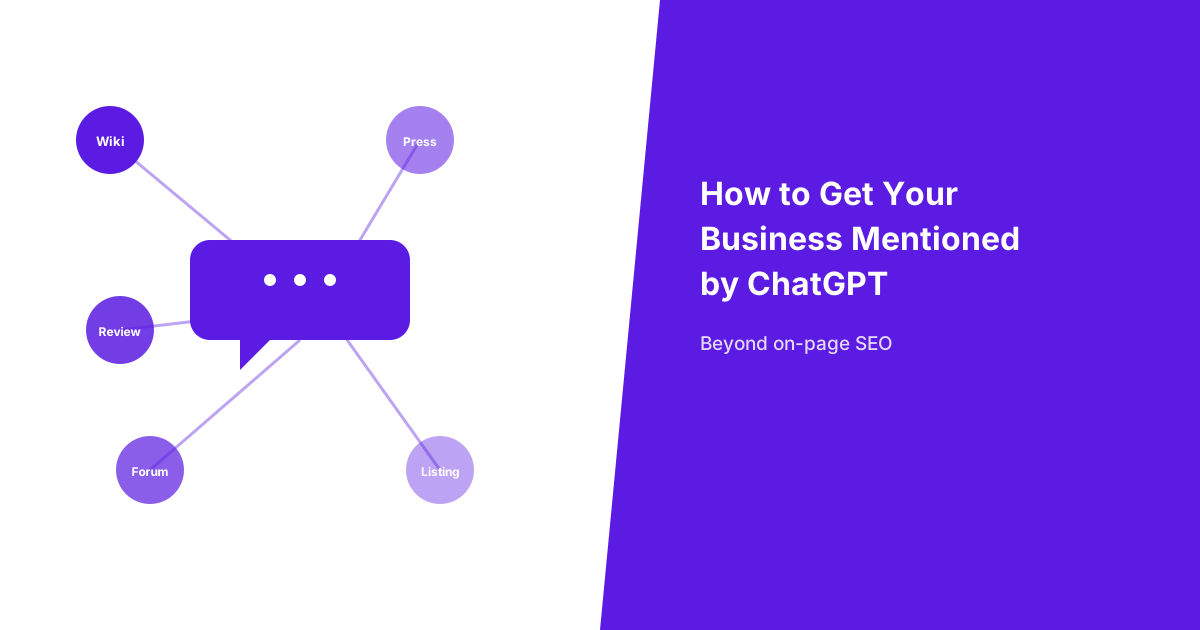
AI engines decide which businesses to recommend by synthesizing the internet’s collective opinion of that business, rather than ranking a single web page the way Google traditionally does. This means an AI model isn’t simply checking who ranks highest for a search term; it’s forming an impression of your business based on everything it has encountered about you across Wikipedia, directories, review sites, forums, news coverage, and your own website combined. A business with consistent, high-authority signals scattered across the wider web tends to get recommended more readily than one that only performs well on its own site.
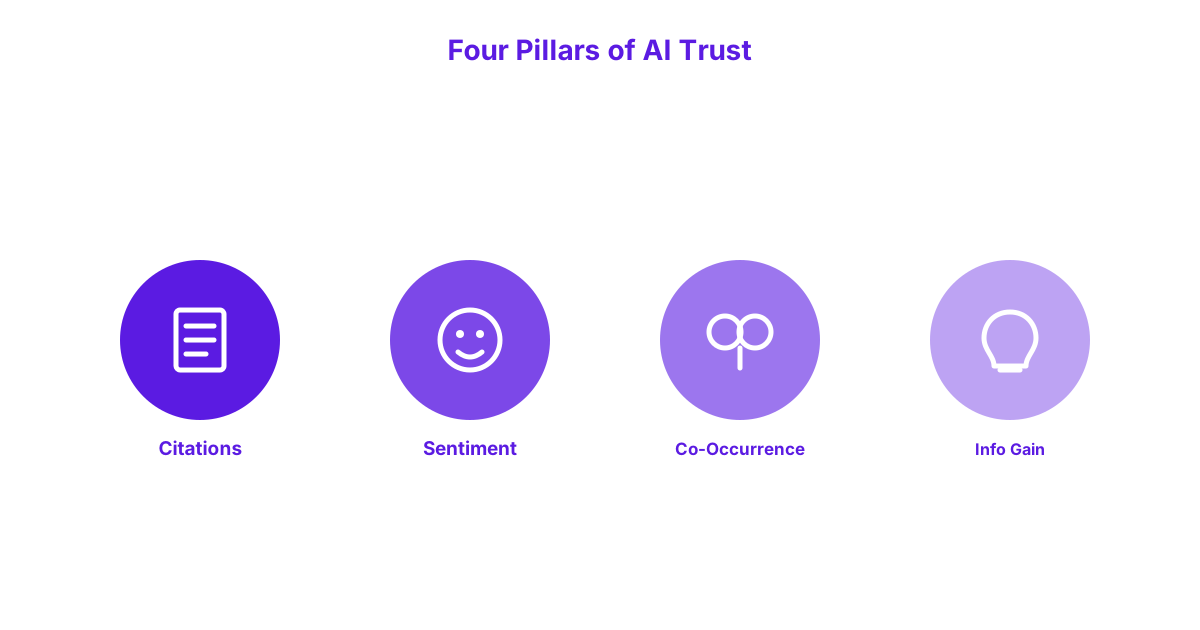
This shift matters because it changes where your effort needs to go. Traditional SEO focuses heavily on optimizing your own website’s pages, and that work still matters, but AI recommendation depends just as much, if not more, on what’s being said about you elsewhere. The rest of this guide breaks this down into four core pillars: citations, sentiment, co-occurrence, and information gain, each of which independently shapes whether an AI model trusts your business enough to recommend it.
What Determines Whether AI Trusts and Recommends Your Business?
Whether AI trusts and recommends your business comes down to four core signals: how widely you’re cited across credible sources, what sentiment surrounds your name online, whether you’re mentioned alongside established competitors, and whether you offer any genuinely original information worth citing. Each of these four pillars operates somewhat independently, meaning a business can be strong on one and weak on another, and addressing all four together produces the greatest overall improvement.
Citations: Are You Mentioned on Wikipedia, Directories, and Industry Sites?
Being mentioned on Wikipedia, established business directories, and recognised industry sites significantly increases the likelihood that an AI model recognises your business as a genuine, established entity rather than an unknown or newly-formed one. AI models are trained on and frequently reference these kinds of credible, structured sources when forming an understanding of what a business is and whether it’s worth recommending. A business with zero presence beyond its own website looks, from an AI model’s perspective, considerably less established than one with a documented presence across several independent, credible sources.
This doesn’t mean every business needs a Wikipedia page specifically, which is a high bar most small businesses won’t meet. It does mean consistent presence across recognised industry directories, local business listings, and any relevant trade or professional association websites meaningfully builds the kind of citation footprint that supports AI recognition over time.
Sentiment: What Does the Internet Actually Think of You?
The sentiment surrounding your business online, meaning whether the overall tone of what’s written about you is positive, negative, or neutral, directly influences whether an AI model is willing to recommend you. AI models increasingly analyse the actual language used in reviews, forum discussions, and social mentions, not just the presence of your name, meaning a business with technically decent star ratings but consistently lukewarm or mixed written sentiment may be recommended less readily than the numeric rating alone would suggest. This is a more nuanced signal than a simple average review score, since it captures the actual substance of what people are saying.
A business that has never actively monitored what’s being said about it in reviews, forums, or social discussions has no real visibility into this signal, which makes it worth checking deliberately rather than assuming everything is fine by default. Addressing consistently negative or mixed sentiment, whether through improved service or through genuinely engaging with legitimate criticism, has a direct bearing on AI recommendation likelihood that a business’s own marketing copy cannot override.
Co-Occurrence: Are You Named Alongside Competitors and Industry Leaders?
Co-occurrence, meaning how often your business is mentioned in the same context as recognised competitors or established industry leaders, signals to an AI model that you belong in the same conversation as those more established names. If your business is only ever mentioned in isolation, with no independent source ever comparing or grouping you alongside recognised players in your industry, an AI model has less basis to consider you a comparable option when generating a recommendation. Appearing in comparison articles, roundup lists, or industry discussions that also mention established competitors builds this signal naturally over time.
This is part of why earning coverage in industry publications or being included in third-party roundups matters beyond the direct traffic such mentions might generate. The co-occurrence itself, appearing in the same piece of content as names an AI model already recognises and trusts, carries value independent of any click-through it produces.
Information Gain: Do You Offer Anything Original an AI Can Cite?
Information gain refers to whether your business offers genuinely original data, insight, or perspective that an AI model can’t find repeated identically across dozens of other sources. AI models increasingly favour citing sources that contribute something distinct, such as original research, a genuinely unique case study, or a specific data point unavailable elsewhere, over sources that simply restate widely available information in slightly different words. A business publishing only generic, widely duplicated content gives an AI model little unique reason to cite that specific business over any of its competitors saying the same thing.
This is closely tied to on-page content quality, though the deeper mechanics of writing genuinely citable, AI-friendly content are covered in a separate guide on this exact topic. For the purposes of brand-level visibility, the key point is simple: original insight earns citation in a way that generic, repeated information does not.
How Do You Claim Your Business’s Entity in the Knowledge Graph?
You claim your business’s entity in the Knowledge Graph by establishing a clear, consistent digital footprint across Google Business Profile, structured business directories, and any relevant industry associations, since there’s no single form to fill out that directly claims Knowledge Graph inclusion. The Knowledge Graph is Google’s underlying database of recognised entities, people, places, and organizations, and inclusion happens gradually as Google’s systems gather enough consistent signals about your business to confidently recognise it as a distinct entity.
A Practical First Step for Establishing Entity Authority
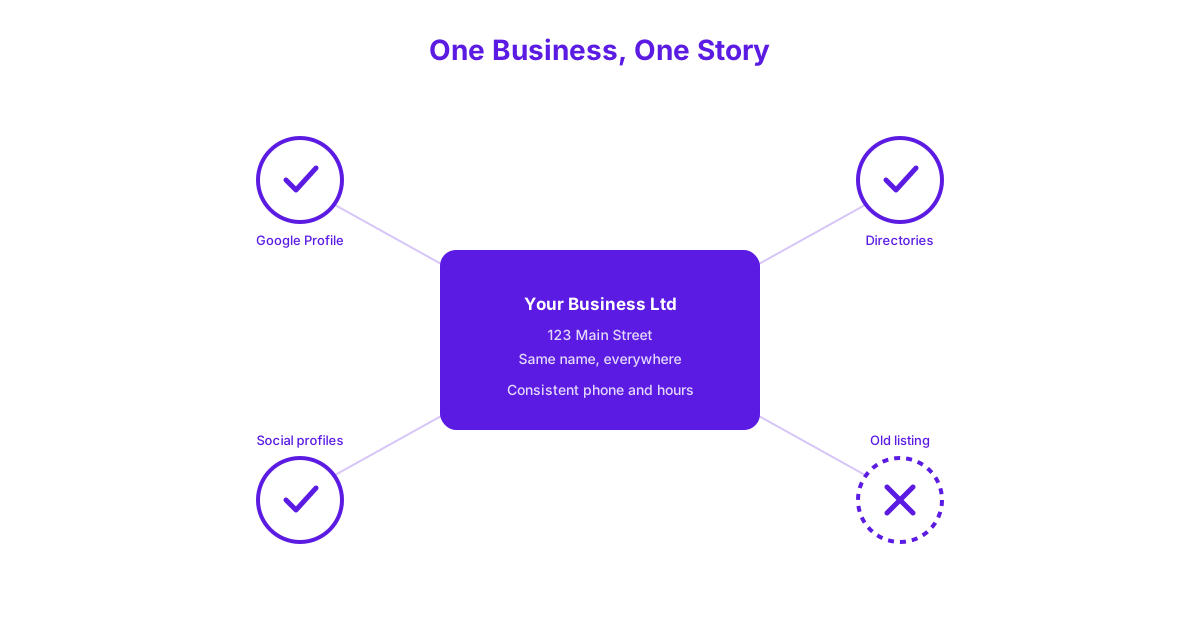
A practical first step for establishing entity authority is ensuring your business name, address, and core details are identical across every platform where your business appears, since inconsistency actively undermines the confidence an AI or search system has in recognising you as a single, coherent entity. A business listed as “Smith & Co Ltd” on one directory and “Smith and Company” on another creates ambiguity that delays or weakens entity recognition, even though a human would easily understand these refer to the same business. Auditing your Google Business Profile, major directories, and your own website for this kind of consistency is a genuinely actionable starting point available to any business today.
Beyond consistency, actively building out a complete, detailed profile across these platforms, rather than a bare minimum listing, gives search and AI systems considerably more material to work with when establishing your entity. This foundational work is closely related to broader SEO fundamentals, and if you’re building this out as part of a wider strategy, it’s worth approaching alongside our SEO service as part of building a stronger online presence overall, rather than as an isolated, one-off task.
Why Do Reviews on Reddit, Quora, and Forums Matter for AI Visibility?
Reviews and discussions on Reddit, Quora, and industry-specific forums matter for AI visibility because these platforms are heavily represented in the training and retrieval data many AI models draw from when forming opinions about businesses. Unlike a business’s own marketing copy, forum and community discussions are seen by AI systems as more independent, unfiltered sources of genuine opinion, which often gives them outsized influence relative to their actual traffic volume.
Auditing What’s Being Said About You in Community Spaces
Auditing what’s being said about your business in community spaces means actively searching Reddit, Quora, and relevant industry forums for your business name to see what existing discussions already exist, rather than assuming no one is talking about you there. Many small businesses are surprised to discover genuine discussion threads about their business, sometimes years old, that they never knew existed and have never engaged with or corrected. This audit costs nothing beyond time and gives you a realistic picture of what an AI model encounters when it looks for information about your business in these spaces.
Where you find outdated, inaccurate, or unfairly negative information, genuinely engaging as your business, correcting factual errors politely and transparently, tends to improve both the human reader’s impression and the underlying sentiment signal these platforms contribute to. Ignoring these spaces entirely means leaving the narrative about your business entirely in other people’s hands, for better or worse.
How Do You Earn Third-Party Validation That AI Engines Trust?
You earn third-party validation that AI engines trust through digital PR, guest contributions to credible industry publications, and podcast or media mentions, all of which place your business’s name in independent, third-party content rather than solely on your own channels. This kind of earned validation carries more weight with AI systems than anything you publish about yourself, precisely because it comes from a source with no direct incentive to promote you.
Digital PR, Guest Contributions, and Podcast Mentions
Digital PR, meaning securing coverage or mentions in genuine news and industry publications, remains one of the most effective ways to build the kind of independent citation and co-occurrence signals AI models weigh heavily. Contributing genuinely useful guest content to established industry publications achieves a similar effect, placing your name and expertise in a third-party context that an AI model can encounter and cite independently of your own website. Appearing as a guest on relevant podcasts or being quoted in industry media coverage builds this same kind of third-party validation, often with the added benefit of being discussed in natural, conversational language that reads as genuine endorsement rather than promotion.
Independent research into AI citation patterns has found that businesses mentioned across multiple independent, credible sources are cited more often by AI engines than those relying on their own website alone, reinforcing that this kind of earned, third-party presence is not a nice-to-have but a genuine driver of AI visibility. Building this kind of ongoing outreach and content placement is fundamentally a content strategy task, and it’s worth pursuing through a content strategy built for visibility rather than treating individual PR opportunities as one-off, disconnected wins.
Does AI Optimization Work Differently on ChatGPT, Gemini, and Perplexity?
Yes, AI optimization works somewhat differently across ChatGPT, Gemini, and Perplexity, since each platform draws on a different mix of training data, live search access, and citation behaviour when forming a recommendation. Understanding these platform-specific tendencies helps explain why a business might be recommended readily by one AI system and rarely by another.
What Each Platform Actually Prioritizes
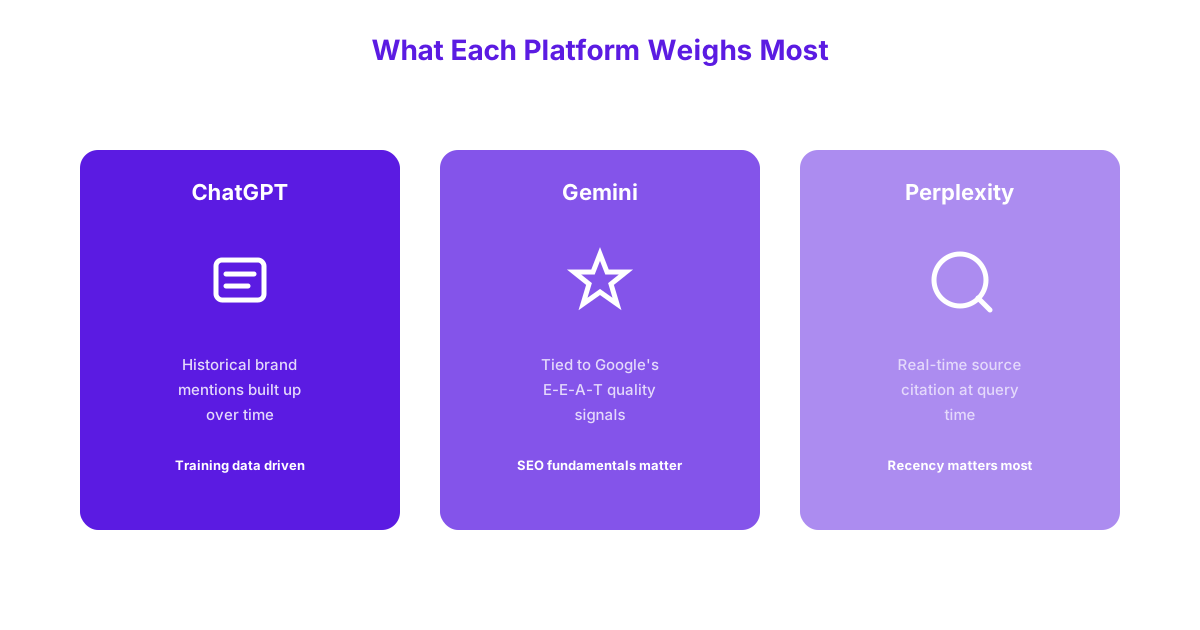
ChatGPT relies heavily on brand mentions accumulated within its historical training data, meaning a business’s established presence across the web over time carries particular weight, and newer businesses may need patience before this training-based recognition catches up to their actual current reputation. Gemini’s recommendations are closely tied to Google’s existing E-E-A-T signals, meaning experience, expertise, authoritativeness, and trustworthiness, since Gemini draws heavily on the same underlying search infrastructure and quality signals Google already uses for traditional ranking. This means strong traditional SEO fundamentals and Gemini visibility are more closely linked than with other AI platforms.
Perplexity places a strong emphasis on real-time source citation, actively searching and citing current, live sources at the moment a query is made rather than relying primarily on historical training data. This makes Perplexity particularly responsive to genuinely current content and recent mentions, meaning a business’s most recent citations and coverage may carry more immediate weight here than on platforms leaning more heavily on accumulated historical data. Rather than optimizing exclusively for one platform, building strong, consistent signals across citations, sentiment, and third-party validation benefits your visibility across all three simultaneously.
What Do You Do If ChatGPT Gets Information About Your Business Wrong?
If ChatGPT gets information about your business wrong, correct it at the source by updating your own listings and public profiles first, since AI models pull from and re-surface publicly available information rather than referencing a single, directly editable record you can simply correct in one place. There’s no direct “edit” button for what an AI model believes about your business, which makes this a genuinely different problem than correcting an error on your own website.
The most effective response is identifying where the incorrect information likely originated, whether an outdated directory listing, an old news article, or a stale Google Business Profile entry, and correcting it at each of those actual sources. As these underlying sources are updated and the correction propagates across the web over subsequent months, AI models gradually incorporate the corrected information during their own updates and retraining cycles, though this process isn’t instant. Directly asking an AI system to note the correction in a specific conversation may help within that single session, but it doesn’t fix the underlying public information the next user’s query will draw from, which is why correcting the source itself remains the only genuinely durable fix.
How Do You Measure Whether Your AI Visibility Is Improving?
You measure whether your AI visibility is improving by regularly and directly asking AI tools questions a potential customer might ask, then tracking whether and how your business gets named in the response over time. This is currently a more manual, hands-on process than traditional SEO rank tracking, since dedicated AI citation tracking tools are still an emerging category without the maturity of established SEO analytics platforms.
Simple Ways to Track Brand Mentions Over Time
Simple ways to track brand mentions over time include asking ChatGPT, Gemini, and Perplexity the exact kinds of questions your potential customers would ask, such as “who’s a good [your service] in [your area],” then logging whether your business appears, how it’s described, and where you rank relative to competitors mentioned alongside you. Repeating this same set of questions monthly, using a consistent, simple spreadsheet to log the results, builds a genuinely useful trend line over time even without specialised tracking software. Testing across all three major platforms rather than just one gives a more complete picture, since, as covered above, each platform draws on different signals and may reflect your improving efforts at different speeds.
Paying attention not just to whether you’re mentioned but how, meaning the specific language and sentiment used to describe your business in these AI-generated answers, provides additional insight beyond a simple yes-or-no mention. A business that goes from not being mentioned at all to being mentioned neutrally, and eventually to being described in genuinely positive, specific terms, is a clear, trackable sign that the underlying reputation and citation work covered in this guide is genuinely working.
What Mistakes Undermine a Business’s AI Visibility?
The most common mistakes that undermine a business’s AI visibility are inconsistent business details scattered across different platforms and ignoring negative sentiment rather than addressing it directly. Both mistakes are entirely within a business’s control to fix, requiring no advertising budget, only attention and follow-through.
Inconsistent Business Details and Ignored Negative Sentiment
Inconsistent business details, such as a different phone number, address format, or business name variation across different directories and platforms, create the same kind of entity confusion for AI systems that it creates for traditional search engines, weakening recognition and trust in both cases. This is a surprisingly common problem even among well-established businesses, since directory listings and profiles created years apart, sometimes by different people within the same business, frequently drift out of sync without anyone noticing. A straightforward audit across your major listings, correcting any discrepancies found, is one of the highest-value, lowest-cost fixes available.
Ignoring negative sentiment, meaning leaving unresolved complaints, outdated negative reviews, or unaddressed criticism sitting untouched online, allows that negative signal to persist indefinitely in the data AI models draw from when forming an opinion about your business. Businesses that actively and transparently respond to legitimate criticism, even when they can’t fully resolve the underlying issue, generally see better sentiment outcomes than those that ignore it entirely and hope it goes unnoticed.
AI Visibility Checklist at a Glance
The table below condenses the core signals and action steps covered in this guide into a single scannable reference.
| Signal | What It Means | Quick Action |
|---|---|---|
| Citations | Mentions across Wikipedia, directories, industry sites | Audit and build presence on credible, relevant directories |
| Sentiment | The overall tone of what’s said about you online | Monitor reviews and forums, address negative sentiment directly |
| Co-Occurrence | Being named alongside competitors and industry leaders | Pursue roundups, comparisons, and industry coverage |
| Information Gain | Offering genuinely original, citable insight | Publish original data, case studies, or unique perspective |
| Entity Consistency | Identical business details across every platform | Audit and correct name, address, and details everywhere |
| Third-Party Validation | Coverage in independent media, podcasts, guest content | Pursue digital PR and genuine guest contribution opportunities |
Frequently Asked Questions
How is getting mentioned by ChatGPT different from ranking in Google?
Getting mentioned by ChatGPT differs from ranking in Google because ChatGPT synthesizes a broad impression of your business from across the web, rather than ranking a specific page against a specific search query. A business can rank well in Google while remaining largely unmentioned by AI models if its wider reputation and citation footprint beyond its own website is weak.
Do I need a Wikipedia page to be recommended by AI?
No, you don’t need a Wikipedia page specifically to be recommended by AI, though it does help for larger, more established businesses that qualify for one. Consistent presence across credible industry directories, review platforms, and third-party mentions can build meaningful entity authority even without meeting Wikipedia’s notability requirements.
Can a small business realistically compete for AI recommendations?
Yes, a small business can realistically compete for AI recommendations, since AI models weigh consistency, genuine sentiment, and citation quality over sheer business size or marketing budget. A small business with a clean, consistent digital footprint and genuinely positive sentiment can be recommended just as readily as a much larger competitor with a messier or more inconsistent online presence.
How long does it take to improve AI visibility?
Improving AI visibility typically takes several months to a year, since AI models update and retrain on new information at their own pace rather than reflecting changes in real time the way a live search index might. Perplexity, which relies more on live search, may reflect changes faster than ChatGPT or Gemini, which depend more heavily on periodic training updates.
Is this the same as AI SEO?
No, this is not the same as AI SEO, though the two are closely related and work best together. AI SEO focuses on structuring your own website’s content to be quoted directly by AI models, while the brand-level reputation and citation work covered in this guide focuses on what happens away from your own website entirely.
Building genuine AI visibility takes patience and consistent effort across your reputation, not a single quick fix, but the businesses building this foundation now are positioning themselves ahead of competitors who haven’t started yet. If you’d like help auditing your current entity presence and building a plan to strengthen it, get in touch and talk to us about your AI visibility.
