How to Build a Content Calendar for Your Business?
Most businesses start publishing content with no real plan, post inconsistently for a few enthusiastic weeks, then quietly stop without ever diagnosing why. The usual culprit isn’t a lack of ideas or effort; it’s the absence of a system that makes consistent publishing genuinely manageable. This guide gives you a practical, step-by-step method for building a content calendar that actually gets used week after week, not just a template that looks good once and gets abandoned by month two.
What Is a Content Calendar?
A content calendar is a planning document that maps out what content you’ll publish, where you’ll publish it, and when, across all your marketing channels in one place. It typically covers blog posts, social media, and email together, giving you a single source of truth rather than separate, disconnected plans scattered across different tools or someone’s memory. This is different from a content strategy document, which explains your overall goals and approach, whereas a calendar is the tactical, scheduled execution of that strategy.
A content calendar saves time by removing the daily decision of “what should I post today,” replacing it with a decision already made in advance during a focused planning session. It reduces errors, such as posting the wrong seasonal content at the wrong time or duplicating a topic you covered two months earlier without realising it. It keeps campaigns cohesive by making sure a blog post, its supporting social content, and any related email all land around the same time rather than drifting apart randomly.
Most importantly, a calendar improves consistency, which is the single factor most closely tied to content marketing actually working over time. Businesses publishing on a visible, planned schedule build the kind of steady momentum that sporadic, unplanned posting never achieves, regardless of how good any individual piece of content is.
What Fields Should Every Content Calendar Include?
Every content calendar needs a consistent set of fields covering what’s being published, where, when, and with what supporting material, so nothing gets left to last-minute guesswork. Getting these fields right upfront is what separates a calendar people actually use from one that gets abandoned after a few weeks.
The Core Columns Every Calendar Needs
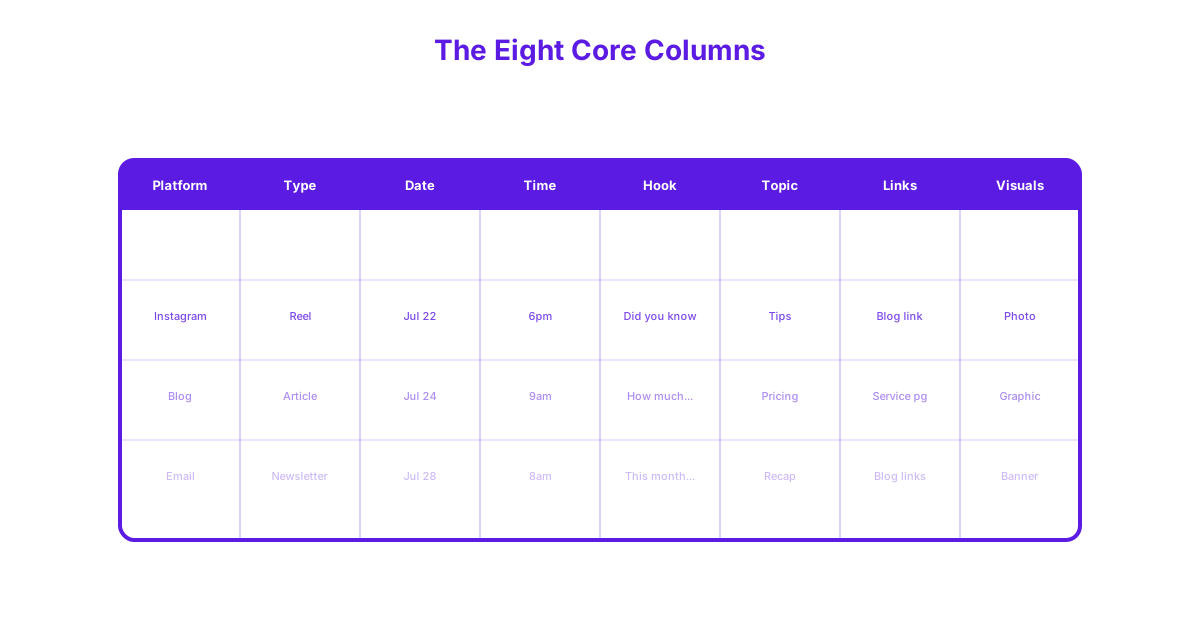
The core columns every content calendar needs are Platform, Content Type, Date, Time, Hook, Topic, Internal and External Links, and Visuals. Platform specifies exactly where the content goes, such as Instagram, the blog, or an email newsletter, since a single piece of content often needs to be tracked across multiple platforms separately. Content Type distinguishes formats like a blog post, a Reel, a carousel, or a newsletter, since each requires different preparation time and has a different natural length.
Date and Time fields lock in exactly when content goes live, ideally reflecting the platform-specific best posting times relevant to your audience rather than a single default slot used everywhere. Hook captures the specific opening line, headline, or angle that will grab attention, since deciding this in advance produces sharper content than writing it in a rush on publishing day. Topic records the underlying subject matter, useful for spotting repetition or gaps at a glance. Internal and External Links track which other pages or sources a piece should link to, and Visuals notes what image, graphic, or video needs to be prepared alongside the written content.
A Simple Content Calendar Template Structure
A simple content calendar template structure organises these fields as columns across a single spreadsheet, with each row representing one individual piece of content to be published. Most businesses find a basic Google Sheet or Excel file with these eight columns entirely sufficient, without needing specialised software to get started. Rows are typically sorted chronologically by publish date, making it easy to scan what’s coming up next at a glance without scrolling through multiple documents.
A status column, such as “Idea,” “In Progress,” “Ready,” or “Published,” is worth adding as a ninth practical column, since it gives an immediate visual sense of what’s actually done versus what still needs attention. This simple structure scales well even as content volume grows, and most businesses can comfortably manage it without upgrading to dedicated calendar software until their content operation becomes considerably more complex.
How Do You Set Goals Before Building Your Calendar?
You set goals before building your calendar by defining specific, measurable outcomes you want the content to achieve, rather than starting with a blank calendar and filling it with whatever content ideas come to mind first. Skipping this step is one of the most common reasons a content calendar ends up full of disconnected, low-impact posts with no clear purpose behind them.
Setting SMART Goals for Your Content
Setting SMART goals for your content means each goal should be Specific, Measurable, Achievable, Relevant, and Time-bound, rather than a vague aspiration like “get more engagement.” A specific, measurable goal might be “increase blog organic traffic by 20% over the next six months” or “generate 15 qualified leads per month from content by the end of the quarter.” These concrete targets give you a clear way to judge whether your calendar is actually working, rather than relying on a vague sense that things feel like they’re going well.
Achievable and relevant goals matter because a target completely disconnected from your current baseline or business priorities produces a calendar built around the wrong metrics entirely. A small business with 200 monthly website visitors setting a goal of 50,000 monthly visitors within three months is setting itself up to feel like a failure regardless of genuinely strong content work. Time-bound goals, with a clear deadline attached, create the natural checkpoints needed to review and adjust your calendar’s direction as you go, which the later sections of this guide cover in more detail.
Should You Plan Your Calendar Around the Year or the Channel First?
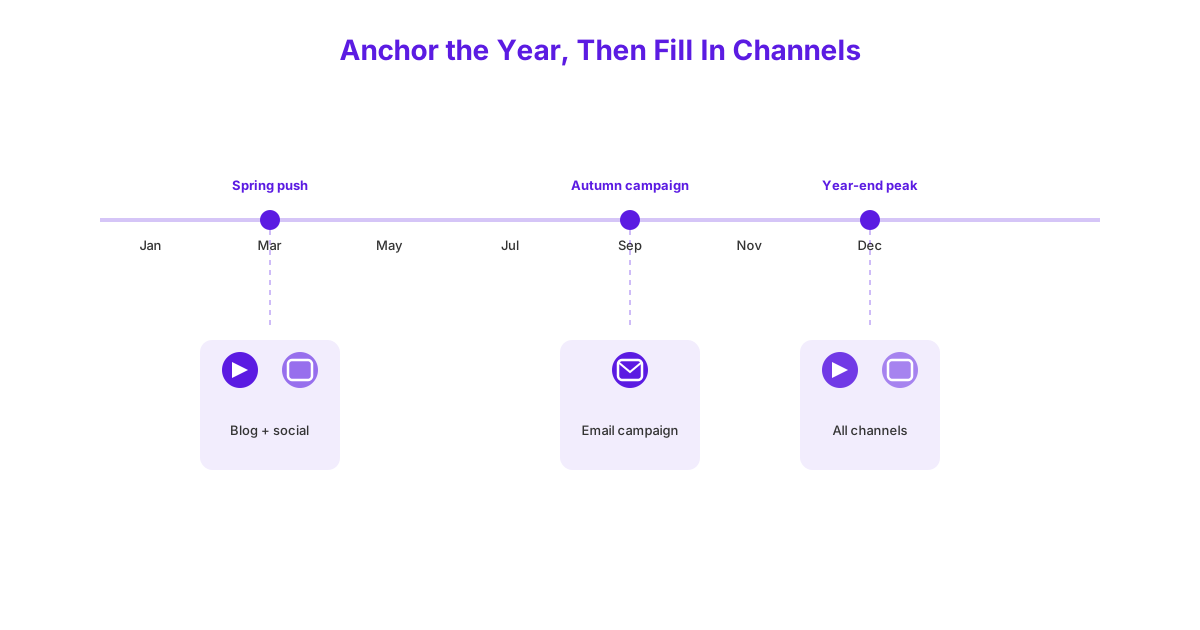
You should plan your calendar around the year first, anchoring it to key dates and seasonal moments across the full twelve months, before filling in channel-specific posting detail. Starting from a single platform’s posting habits, such as deciding you’ll post on Instagram three times a week, puts the tactical detail before the strategic structure, which tends to produce a calendar full of filler content with no clear throughline. Starting with the year gives your content a reason to exist beyond simply filling a slot on the schedule.
A year-first approach means identifying major seasonal moments relevant to your business first: a landscaping company plans around spring and early summer demand, an accountant plans around tax deadlines, and a retailer plans around key shopping periods like Black Friday and the run-up to Christmas. Once these anchor points are mapped across the year, channel-specific detail, such as exactly which platform and time slot each piece of content will use, becomes a much simpler filling-in exercise layered on top of an already coherent structure. This sequencing also naturally prevents the common problem of realising in November that you have nothing planned for your business’s busiest season, since that season was identified as a planning anchor months earlier rather than an afterthought.
How Do You Choose the Right Channels for Your Content Calendar?
You choose the right channels for your content calendar by identifying where your actual audience spends time and pays attention, rather than trying to maintain a presence on every available platform simultaneously. Spreading effort across too many channels typically produces mediocre content everywhere instead of strong, consistent content on the two or three channels that genuinely matter for your business.
Matching Channels to Where Your Audience Actually Is
Matching channels to where your audience actually is means checking your existing customer data, industry norms, and basic platform demographics before committing calendar space to any specific channel. A B2B professional services business should weight LinkedIn heavily and may reasonably skip TikTok entirely, while a retail or hospitality business focused on younger local customers likely benefits more from Instagram and TikTok than from LinkedIn. This isn’t about following a rigid rule for your industry, it’s about honestly assessing where your specific customers are actually active rather than assuming every platform deserves equal attention.
A realistic content calendar for most small businesses covers two to three core channels thoroughly rather than five channels superficially, since consistent quality on fewer platforms consistently outperforms scattered, inconsistent effort spread too thin. If you’re unsure which channels genuinely deserve calendar space for your specific business, it’s worth building this decision into a full content strategy rather than guessing, since getting this choice wrong early wastes months of calendar planning built around the wrong platforms.
How Do You Decide What Mix of Content to Plan?
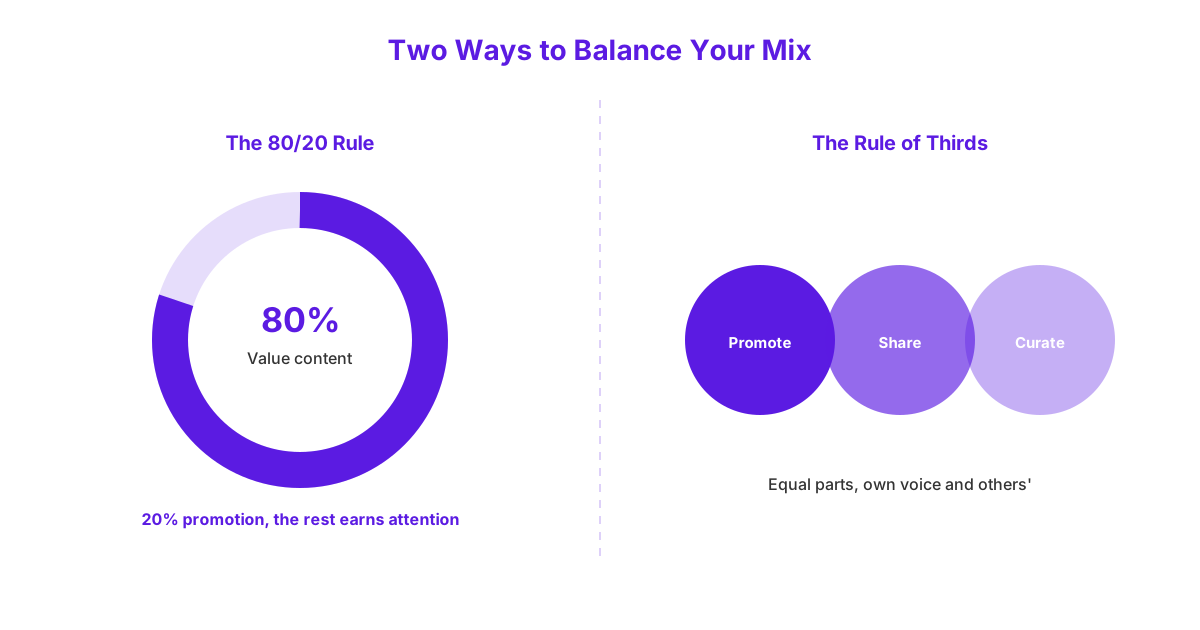
You decide what mix of content to plan by balancing genuinely useful, value-driven content against direct promotional content, using an established ratio rather than posting whatever comes to mind in whatever order. Two simple frameworks, the 80/20 rule and the rule of thirds, give you a practical structure for this balance without requiring complex planning software.
The 80/20 Rule for Balancing Value and Promotion
The 80/20 rule for content means roughly 80% of your calendar should be genuinely useful, educational, or entertaining content, with only about 20% directly promoting your products or services. This ratio exists because audiences quickly disengage from a feed or inbox that constantly asks for something, whether that’s a sale, a booking, or an enquiry, without first earning attention through content that’s actually useful on its own merit. A landscaping business following this ratio might publish four genuinely helpful posts about garden care for every one direct promotion of its own services.
This doesn’t mean promotional content is somehow lesser or should be avoided; it means it needs to be earned through a foundation of value first. A calendar that’s 80% value and 20% promotion consistently outperforms one weighted the opposite way, since the value-driven majority is what keeps an audience engaged and willing to see the occasional promotional post at all.
The Rule of Thirds: Promote, Share, and Curate
The rule of thirds divides your content into three equal categories: one third promoting your own business, one third sharing personal stories or behind-the-scenes content, and one third curating or sharing relevant content from other sources. This framework works particularly well for businesses that find the 80/20 rule too promotion-light, since it allows a slightly larger, still-reasonable share of self-promotional content within a still-balanced structure. Behind-the-scenes content, such as showing your team at work or your process for completing a job, builds a personal connection that pure promotional or curated content can’t achieve on its own.
Curated content, meaning sharing and commenting on relevant industry news or other businesses’ genuinely useful content, positions your business as a knowledgeable, generous participant in your industry rather than one only ever talking about itself. Either framework, the 80/20 rule or the rule of thirds, works well as a starting structure. The specific ratio matters less than having any deliberate ratio at all, rather than defaulting to whatever feels easiest to post that particular day.
How Do You Keep a Content Calendar Stocked With Ideas?
You keep a content calendar stocked with ideas by building a bank of evergreen content that doesn’t go out of date, then layering timely and seasonal content on top as opportunities arise throughout the year. Running out of ideas partway through the month is one of the most common reasons a previously well-planned calendar quietly falls apart.
Building an Evergreen Content Bank
Building an evergreen content bank means compiling a running list of topics that remain relevant regardless of when they’re published, such as frequently asked customer questions, common misconceptions in your industry, or foundational how-to content related to your services. This bank acts as a reliable fallback whenever a specific week’s planned content falls through or a gap unexpectedly opens up in the schedule. A useful target is building a bank of at least 20 to 30 evergreen ideas before your calendar even goes live, giving you a solid buffer well beyond the first month or two of publishing.
Customer questions, whether from sales conversations, support emails, or comments on past posts, are consistently the richest source for this bank, since they represent content topics already proven to matter to real people rather than guessed at in isolation. Revisiting and expanding this bank every few months keeps it from becoming stale or repetitive as your business and audience evolve.
Adding Timely and Seasonal Content as You Go
Adding timely and seasonal content as you go means layering in content tied to current events, industry news, or seasonal moments on top of your evergreen foundation, rather than trying to plan every single timely post months in advance. This category naturally requires more flexibility than evergreen content, since it needs to be relevant to what’s actually happening at the time, but it shouldn’t require abandoning the rest of your planned calendar to accommodate it. A dedicated, lightly planned slot each month, left deliberately open for timely content, works better than either ignoring current events entirely or letting them completely derail an otherwise solid calendar.
This is also where the year-first planning approach described earlier pays off directly, since major seasonal moments were already anchored into the calendar structure well in advance, leaving genuinely last-minute timely content to a smaller, more manageable category layered on top.
How Often Should You Review and Update Your Content Calendar?
You should review your content calendar weekly for scheduling accuracy and monthly for broader performance and strategy, since these two review rhythms catch different kinds of problems at the right time. A weekly review catches practical issues, such as a missing visual asset for tomorrow’s post or a scheduling conflict between two pieces of content, before they become a last-minute scramble.
A monthly review looks at a different level entirely: which content actually performed well, which topics fell flat, and whether the current channel mix and content ratio are still serving your goals as originally set. A rigid content calendar, one treated as fixed and unchangeable once created, tends to break down within a few months, since it can’t adapt to genuinely useful information about what’s actually resonating with your specific audience. Building in this dual review rhythm from the outset, rather than treating the calendar as a one-time planning exercise, is what keeps it a living, useful tool rather than a document that quietly stops matching reality.
What Mistakes Do Businesses Make When Building a Content Calendar?
The most common mistakes businesses make when building a content calendar are overloading the schedule beyond what’s realistically sustainable, skipping audience research entirely, ignoring performance data once the calendar is live, and failing to coordinate content across channels. Each of these mistakes individually undermines an otherwise well-structured calendar.
Overloading the Schedule and Skipping Audience Research
Overloading the schedule with an ambitious daily posting cadence across every channel simultaneously is one of the most common reasons a content calendar collapses within the first month, since the workload quickly exceeds what a small team can realistically sustain. A more modest, genuinely achievable cadence maintained consistently for a full year outperforms an aggressive schedule that burns out the person responsible within a few weeks. Skipping audience research and building a calendar purely from guesswork about what your audience wants produces content that technically follows a good structure but misses the actual topics and formats your specific customers care about.
This combination, an overloaded schedule built on unverified assumptions about the audience, is a particularly damaging pairing, since it produces both burnout and underwhelming results simultaneously, making it very tempting to abandon the whole system rather than adjust the specific parts that were actually broken.
Ignoring Performance Data and Neglecting Cross-Channel Coordination
Ignoring performance data once a calendar is live means continuing to publish according to the original plan regardless of what’s actually working, missing the clearest available signal for how the calendar should evolve over time. Independent research, such as CoSchedule’s studies on marketing organization, consistently shows that marketers who document and follow a content strategy are significantly more likely to report success than those who don’t, reinforcing that the discipline of planning and reviewing genuinely correlates with better outcomes, not just a feeling of being more organised. Neglecting cross-channel coordination, such as publishing a blog post with no corresponding social promotion, or running social content that contradicts a current email campaign, wastes the natural reinforcement that coordinated content across channels provides.
Businesses managing multiple channels without a shared calendar coordinating them often don’t realise how much redundant effort and missed reinforcement this causes until they see it laid out in one place. If cross-channel coordination consistently falls through the cracks in your current setup, it’s worth looking at our social media marketing service for coordinated social media management that works from the same calendar driving your broader content, rather than running independently of it.
Can AI Help You Build and Manage a Content Calendar?
Yes, AI can genuinely help with idea generation, first-draft content, and scheduling suggestions, but human judgement should still guide brand voice, final editing, and the actual publishing decisions. AI tools are particularly useful for quickly generating a long list of topic ideas within your evergreen content bank, or suggesting posting times based on general platform data, tasks that are time-consuming to do manually but don’t require deep business-specific judgement.
Where AI falls short is in genuinely understanding your specific brand voice, your customers’ particular concerns, and the nuanced judgement calls around what actually fits your business at any given moment. Using AI to speed up the mechanical parts of calendar building, such as drafting a first pass of ideas or generating a rough content outline, while keeping a human reviewing and refining the final output, mirrors the same balance covered in more depth in our guide to content marketing fundamentals for Irish SMEs. The safest approach treats AI as a fast first-draft tool throughout the calendar-building process, not a replacement for the judgement needed to make sure content genuinely fits your business and audience.
Content Calendar Building Blocks at a Glance
The table below condenses the full build process covered in this guide into a single scannable reference.
| Step | What It Covers | Why It Matters |
|---|---|---|
| Set Goals | SMART, specific targets for your content | Gives the calendar a clear purpose beyond filling slots |
| Plan the Year First | Seasonal moments and key dates across 12 months | Prevents scrambling during your busiest periods |
| Choose Channels | Two to three platforms matching your actual audience | Focuses effort where it genuinely pays off |
| Decide Content Mix | 80/20 rule or rule of thirds | Balances value with promotion deliberately |
| Build an Idea Bank | 20 to 30 evergreen topics before launch | Prevents running out of ideas mid-month |
| Add Core Fields | Platform, type, date, time, hook, topic, links, visuals | Removes daily last-minute decisions |
| Review Weekly and Monthly | Scheduling checks and performance review | Keeps the calendar adapting rather than breaking down |
Frequently Asked Questions
What is the difference between a content calendar and a content plan?
A content calendar is the tactical, scheduled execution of content, specifying exact dates, platforms, and topics, while a content plan is the broader strategy document explaining overall goals and direction. The plan answers why and what you’re trying to achieve, while the calendar answers exactly when and where each specific piece of content happens.
How far in advance should a content calendar be planned?
Most small businesses should plan their content calendar four to six weeks in advance for regular content, with major seasonal moments mapped out a full year ahead. This balance provides enough lead time to prepare quality content without planning so far ahead that flexibility for timely or trending topics becomes impossible.
What tools can I use to build a content calendar?
A basic Google Sheet or Excel spreadsheet is genuinely sufficient for most small businesses building their first content calendar, requiring no paid software to get started. As content volume grows, dedicated tools like Trello, Asana, or specialised content calendar platforms can add useful features like automated scheduling, but they aren’t necessary to begin.
How much content should a small business plan per week?
Most small businesses should realistically plan for one to two blog posts per month, three to five social media posts per week, and one email newsletter every two to four weeks, adjusted based on actual capacity. A sustainable, consistently maintained lower volume outperforms an ambitious schedule that collapses within a few weeks from being unrealistic to maintain.
Does a content calendar improve SEO?
Yes, a content calendar improves SEO indirectly by enforcing the consistent, planned publishing schedule that search engines reward with better visibility over time. A calendar also reduces topic duplication and keyword cannibalization, since planning content in one place makes it far easier to spot when a new topic idea overlaps with something already published.
Building a content calendar that actually survives past the first month comes down to realistic planning, a clear structure, and building in review time from the start rather than treating it as a one-off task. If you’d like help building a calendar and content strategy tailored to your specific business, talk to our team about your content strategy and we’ll help you build something you can actually stick to.
