Google Ads vs SEO Ireland: Which Is Better for Your Business?
Every Irish business owner eventually asks the same question: should I pay for Google Ads or invest in SEO? The honest answer is that it depends on your timeline and your budget, not on which channel is objectively “better.” This article gives you a real, numbers-based comparison, with actual euro figures and worked examples, rather than the generic theory most comparisons stop at.
How Do SEO and Google Ads Actually Compare?
SEO and Google Ads differ most in speed, cost structure, and longevity, even though both aim to get your business found on Google. Google Ads delivers traffic within hours of launching a campaign, while SEO typically takes three to six months to show meaningful movement. The table below breaks down the core differences side by side.
| Factor | SEO | Google Ads |
|---|---|---|
| Speed | 3 to 6 months for meaningful results | Traffic within hours of launch |
| Cost Model | Ongoing investment, no per-click charge | Pay per click, stops the moment spend stops |
| Longevity | Compounds and persists over years | Traffic disappears when budget stops |
| Trust | Organic results seen as more credible by users | Seen as an ad, some click-avoidance |
| Best For | Long-term, sustainable lead generation | Immediate visibility and testing demand |
How Much Does Google Ads Actually Cost in Ireland?
Google Ads costs in Ireland typically range from €1.50 to €8 per click for general search terms, with highly competitive industries like legal and medical services running significantly higher. The actual cost depends heavily on your industry, your Quality Score, and how competitive your target keywords are. Budget expectations need to be set around your specific sector, not a generic industry average.
Average Cost Per Click by Industry
General search terms in Ireland typically cost between €1.50 and €8 per click, while legal and medical search terms often cost €10 to €25 per click due to intense competition and high customer lifetime value. Home services like plumbing and electrical work usually fall in the €3 to €7 range, while e-commerce and retail terms often sit lower, between €0.50 and €3, because of higher search volume and lower competition per click. These ranges shift based on location targeting too, with Dublin-based campaigns often costing more per click than campaigns targeting smaller towns like Tuam or Athlone due to higher competition density.
Broader industry benchmark data, such as WordStream’s annual Google Ads benchmarks report, shows similar cost per click patterns across comparable markets, which suggests these Irish ranges are consistent with wider international trends rather than a local pricing anomaly. Businesses should treat published averages as a starting reference point, then adjust based on their own campaign data within the first few weeks of running ads.
What Happens to Your Traffic the Moment You Stop Paying
Your Google Ads traffic drops to zero almost immediately once you stop paying, because paid visibility only exists for as long as the campaign is actively funded. This is the single biggest structural difference between paid and organic traffic, and it catches businesses off guard when a tight month forces them to pause spend. A business that has relied entirely on Google Ads for two years has no residual visibility to fall back on if the budget disappears.
This doesn’t make Google Ads a bad investment, but it does mean the spend needs to be viewed as a recurring cost of doing business, similar to rent, rather than a one-time investment that builds an asset. Businesses that understand this upfront tend to budget more realistically and avoid the shock of a sudden traffic cliff.
How Much Does SEO Actually Cost in Ireland?
SEO in Ireland typically costs between €500 and €1,200 per month for small to medium businesses, plus an initial website build cost if the site isn’t already properly structured for search. Unlike Google Ads, this spend builds a compounding asset rather than renting temporary visibility. The real question isn’t just the monthly figure, but how that cost per result changes over time.
Typical Monthly SEO Investment vs a One-Time Website Build
A typical monthly SEO retainer for a small Irish business runs between €500 and €1,200, covering content creation, technical fixes, and ongoing optimisation work. If the business doesn’t already have a website built with proper SEO foundations, an initial one-time build cost of roughly €1,200 to €2,500 is usually needed before ongoing SEO work can be fully effective. Skipping this step and running SEO on top of a poorly structured site significantly slows down results and wastes months of otherwise productive work.
Businesses already running paid ads sometimes underestimate that a strong SEO foundation requires this website investment upfront, treating it as optional. It isn’t optional if the existing site has thin content, no schema markup, or poor mobile performance, since SEO work built on a weak foundation underperforms regardless of how much monthly effort goes into it.
Why SEO’s Cost Per Enquiry Drops Over Time
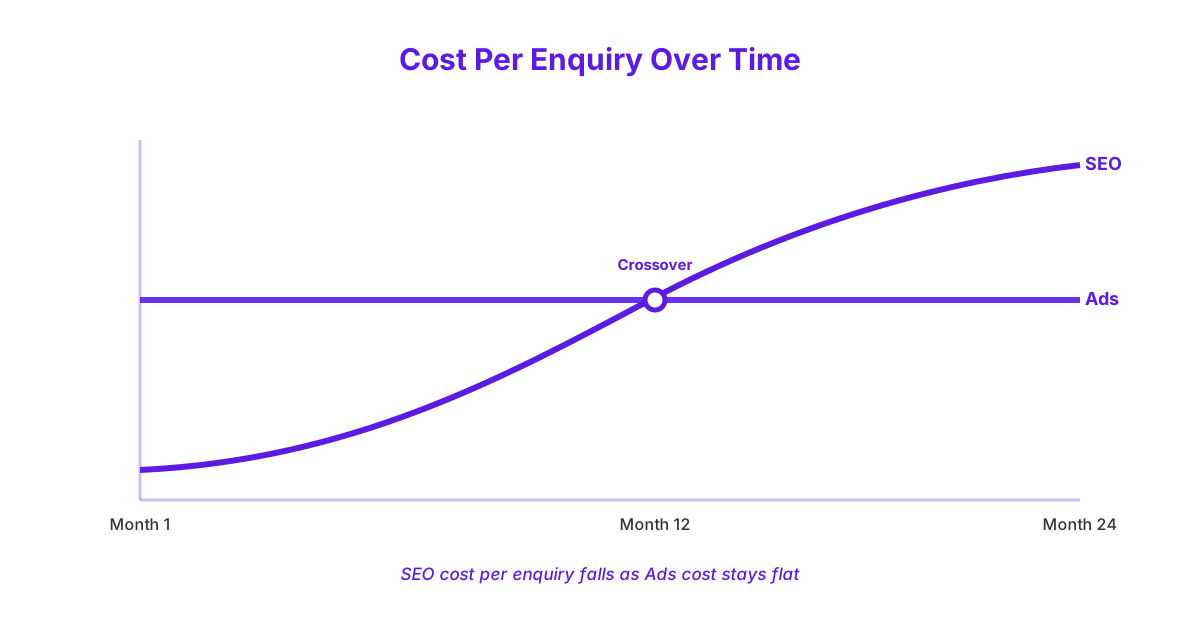
SEO’s cost per enquiry drops over time because the content and rankings built in earlier months continue generating traffic without requiring new spend to sustain them. A page that ranks well for a valuable keyword in month four keeps generating enquiries in month twelve and beyond, without the business paying anything additional for that specific piece of visibility. This compounding effect is the core economic argument for SEO over paid advertising in the long run.
The tradeoff is patience. The first three to four months typically show a high cost per enquiry, or no measurable enquiries at all, before momentum builds. Businesses that abandon SEO during this early phase never reach the point where the investment starts paying off disproportionately to the ongoing cost.
What’s the Real Cost Comparison Over 12 Months?
Over a 12 month period, Google Ads typically costs more per enquiry generated than SEO, but SEO requires patience through a slow first few months that Google Ads does not. The worked examples below use realistic Irish market figures to show exactly how the numbers play out over a full year for each channel.
Google Ads Over 12 Months: The Numbers
A typical Irish small business running a €1,000 monthly Google Ads budget at a blended average cost per click of €4 generates roughly 250 clicks per month, or 3,000 clicks across the year. At a realistic 5% conversion rate from click to enquiry, that produces approximately 150 enquiries over 12 months from a total annual spend of €12,000. That works out to a cost per enquiry of roughly €80, a figure that stays consistent throughout the year since paid traffic doesn’t compound.
This cost per enquiry can be improved through better ad copy, landing page optimisation, and tighter keyword targeting, but it will not fall meaningfully without additional spend or optimisation effort. The traffic volume and cost per enquiry in month 12 look almost identical to month one, unless active campaign management improves performance.
SEO Over 12 Months: The Numbers
A typical Irish small business investing €700 per month in SEO, plus an initial €1,800 website build, spends approximately €10,200 in total across year one. Enquiries in year one typically total around 60, weighted heavily toward the second half of the year as rankings build, producing a year one cost per enquiry of roughly €170, higher than Google Ads during this initial period. This is the phase where many businesses mistakenly conclude that SEO “isn’t working.”
The picture changes significantly in year two. With the website foundation already built, year two costs drop to just the €700 monthly retainer, totalling €8,400, while enquiries typically rise to around 150 or more as the compounding content and rankings from year one continue generating traffic. That produces a year two cost per enquiry of roughly €56, meaningfully lower than Google Ads’ consistent €80, and the gap continues to widen in year three and beyond.
When Does Google Ads Make Sense for an Irish Business?
Google Ads makes the most sense when a business needs immediate visibility, is launching something new, or operates in a market where organic ranking would take too long to matter. Speed and control over exactly who sees your ad and when are Google Ads’ core strengths, and certain business situations lean heavily on exactly those strengths.
Situations Where Paid Ads Win
Paid ads win for new business launches, seasonal promotions, high-margin products, and highly competitive markets where organic ranking would take a year or more to break into. A new café opening in Galway city centre, for example, can’t wait six months for organic rankings to build, and needs immediate visibility during its critical opening weeks. Seasonal businesses, such as a landscaping company needing spring bookings, face the same time pressure and benefit from paid ads’ instant switch-on visibility.
High-margin products and services can absorb a higher cost per enquiry and still turn a healthy profit, making the higher relative cost of paid ads less of a concern than it would be for a low-margin business. Highly competitive markets, where established competitors already dominate page one organically, also favour paid ads in the short term, since outranking entrenched competitors organically can take significantly longer than simply outbidding them for ad placement.
When Is SEO the Better Investment?
SEO is the better investment when a business is playing a long game, operates in a services-based or content-rich industry, and can afford to be patient through the first few months without seeing dramatic returns. Local service businesses, in particular, benefit disproportionately from strong SEO because customers actively search for these services with clear buying intent.
Situations Where Organic Search Wins
Organic search wins for local service businesses, content-rich industries, and any business thinking in terms of years rather than months. A plumbing business in Tuam that consistently ranks for “emergency plumber Tuam” and related local searches builds a durable stream of enquiries that doesn’t disappear the moment a monthly budget runs out. Content-rich industries, such as professional services or education, also benefit strongly, since these sectors reward the kind of in-depth, authoritative content that SEO strategies are built around.
Businesses that think in multi-year timeframes rather than needing next month’s results consistently see SEO outperform paid ads on cost per enquiry once the compounding effect kicks in. If your business fits this profile, it’s worth understanding how we approach SEO as a long-term growth channel rather than a quick fix, since the strategy and patience required differ significantly from a paid campaign mindset.
Should You Combine SEO and Google Ads Instead of Choosing One?
Yes, combining SEO and Google Ads is usually the smartest approach for most Irish businesses, rather than treating the decision as either-or. Google Ads can generate enquiries while SEO builds momentum in the background, giving you the best of both channels’ strengths at different points in your growth.
A Phased Approach for the First Two Years
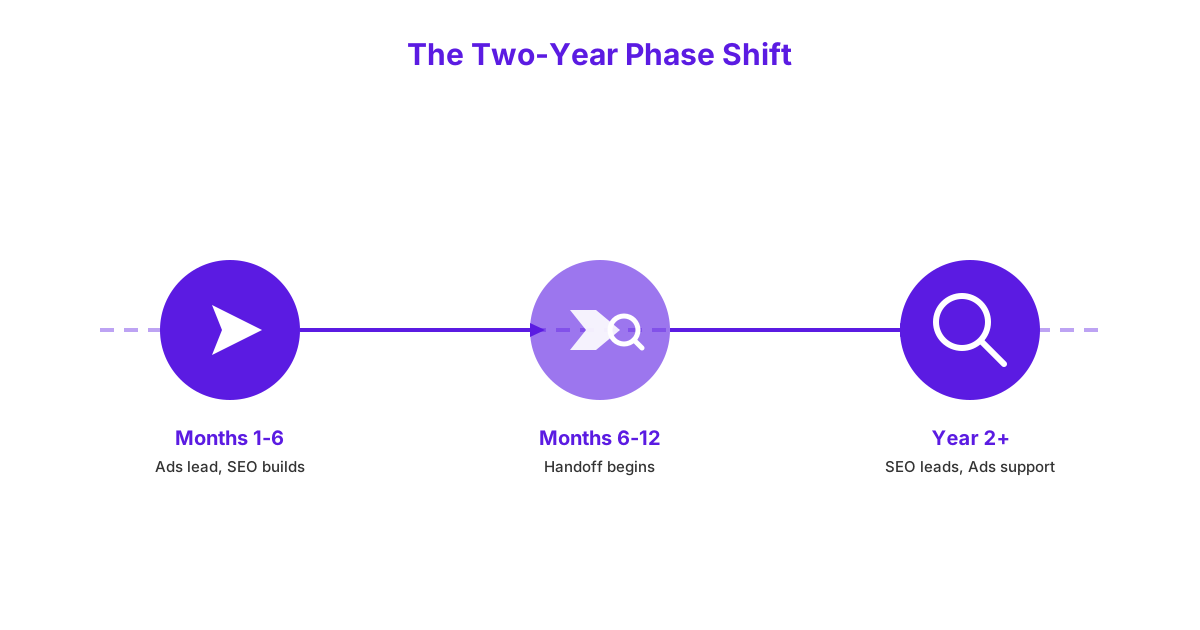
In months one to six, the recommended approach is to run Google Ads as the primary lead source while SEO work begins in parallel, since ads generate enquiries immediately while organic rankings are still building. This period should also include the foundational SEO work described earlier: proper website structure, technical fixes, and initial content, since this groundwork is what allows SEO to accelerate later. Ad spend during this phase should be treated as the primary revenue driver, not a supplementary channel.
In months six to twelve, SEO traffic should begin contributing a meaningful share of enquiries, allowing many businesses to start reducing Google Ads spend without losing overall lead volume. This is the transition period where the two channels effectively hand off responsibility for lead generation, though most businesses shouldn’t cut ads spend to zero yet. From year two onward, SEO typically becomes the dominant, lower-cost lead source, with Google Ads scaled back to a smaller, targeted role, such as promoting specific offers or maintaining visibility for a few highly competitive terms that organic rankings haven’t fully captured.
Businesses managing both channels simultaneously benefit from having them properly coordinated rather than run in isolation by separate providers with no shared strategy. If you’re weighing this phased approach for your own business, our Google Ads management service is built to work alongside SEO rather than compete with it for the same budget and attention.
What Mistakes Do Irish Businesses Make With SEO and Google Ads?
The most common mistakes Irish businesses make are running ads to a weak website, skipping conversion tracking, expecting instant SEO results, and treating either channel as set-and-forget. These mistakes are avoidable, and most of them come down to insufficient planning before spend begins rather than anything wrong with the channels themselves.
Common Pitfalls on Both Sides
Running Google Ads traffic to a slow, poorly designed, or unclear website wastes ad spend on clicks that never convert, regardless of how well-targeted the campaign itself is. Skipping conversion tracking is an equally common mistake, since without it, a business has no reliable way to know which keywords or ads are actually producing enquiries versus which ones are just burning budget. Expecting instant SEO results within the first four to six weeks leads many businesses to abandon a strategy right before it would have started working.
Set-and-forget campaigns are the final major pitfall on both sides. Google Ads campaigns left unmonitored for months often see rising costs per click and declining Quality Scores, while SEO strategies left static without new content or technical updates plateau and eventually get overtaken by more active competitors. Both channels require ongoing attention to perform well over time, not a one-time setup followed by silence.
SEO vs Google Ads at a Glance
The table below summarises the core tradeoffs covered throughout this article, useful as a quick reference when deciding where to allocate your next marketing budget.
| Factor | SEO | Google Ads | Best For |
|---|---|---|---|
| Time to Results | 3 to 6 months | Hours to days | Ads for urgency, SEO for patience |
| Year 1 Cost Per Enquiry | Roughly 170 | Roughly 80 | Ads in year one |
| Year 2 Cost Per Enquiry | Roughly 56 | Roughly 80 (unchanged) | SEO from year two onward |
| Traffic After Budget Stops | Persists | Disappears immediately | SEO for durability |
| Best Use Case | Local services, long-term growth | Launches, seasonal, high-margin | Depends on timeline |
Frequently Asked Questions
Is SEO cheaper than Google Ads in Ireland?
SEO is typically cheaper than Google Ads over a two year period, but usually more expensive per enquiry in the first few months. A typical Irish business sees SEO’s cost per enquiry fall from around €170 in year one to around €56 in year two, compared to a consistent €80 for Google Ads throughout.
Can you do SEO and Google Ads at the same time?
Yes, running SEO and Google Ads simultaneously is a common and effective strategy for most Irish businesses. Ads provide immediate enquiries while SEO builds toward a lower, more sustainable long-term cost per enquiry in the background.
How long before SEO beats paid ads?
SEO typically starts beating Google Ads on cost per enquiry around the start of year two, based on realistic Irish market figures. The exact timeline depends on industry competitiveness, content quality, and how strong the website’s technical foundation was to begin with.
Are Google Ads good for small local businesses?
Yes, Google Ads work well for small local businesses that need immediate visibility, particularly during a launch, a seasonal peak, or while SEO is still building momentum. They’re less cost-effective as a sole long-term strategy compared to SEO once organic rankings have had time to establish.
Which generates more conversions, SEO or Ads?
Over a full year, SEO commonly generates a lower total conversion count than Google Ads in year one, but overtakes it by year two once organic momentum builds. Google Ads delivers a more predictable, immediate conversion volume from day one, while SEO’s conversion volume compounds and grows month over month.
Choosing between SEO and Google Ads doesn’t have to be a guessing game once you understand the real cost structure behind each channel. If you’d like a plan built around your specific budget, timeline, and industry rather than generic advice, talk to us at Magnitu Digital for a free consultation.
